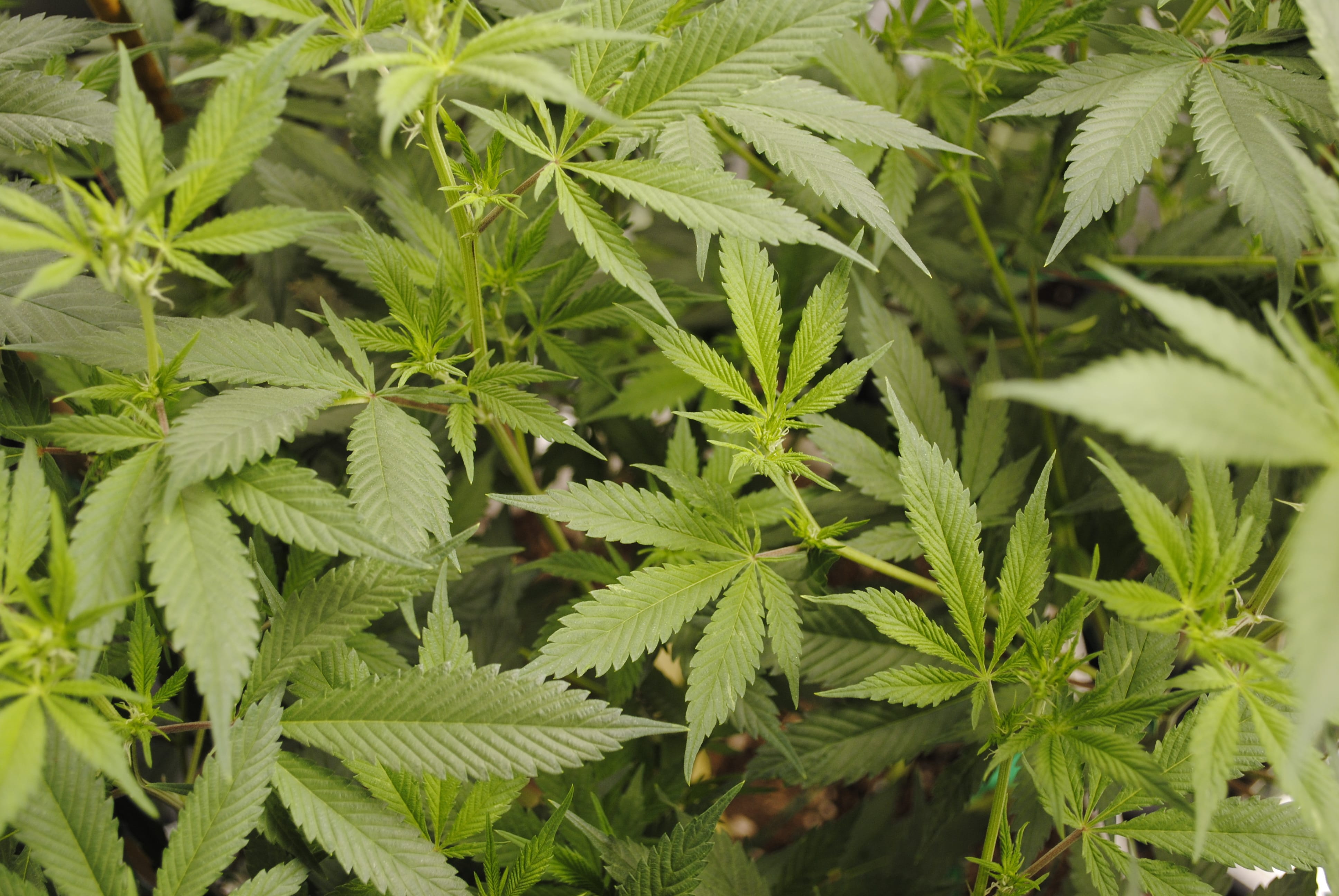
For home cannabis growers, one of the most unexpected challenges you might encounter early on is something called “the stretch.” This phenomenon typically occurs during the first few weeks of the growth cycle—especially in the early flowering phase—but technically, it can happen at any time.
As the name implies, the stretch is when your cannabis plants suddenly shoot up in height. And no, this isn’t always a good thing. If your plants suddenly become tall and lanky, with thin stalks and a top-heavy lean (think the Leaning Tower of Pisa), they’re likely stretching—and it could lead to problems.
While a tall plant might seem like a win, excessive vertical growth can cause stalks to weaken, bend, or even break. It can also push buds too close to your lights, leading to light burn. Let’s break down what causes cannabis stretch and how to prevent it.
Causes of Cannabis Plant Stretch

To manage stretch, it helps to first understand why it happens. Several factors can contribute:
Not Enough Light
One of the most common culprits is inadequate lighting. If your plants are too far from the light source, they’ll stretch upward to get closer. Even if the distance seems fine, weak or low-quality lighting can cause the same response.
Improper light spectrum can also contribute. Too much red light during the vegetative phase can promote vertical growth over lateral development. Aim for a balanced full-spectrum light—particularly with strong blue light during veg.
Further Reading:Understanding Light Spectrums In Cannabis Cultivation
Environmental Factors
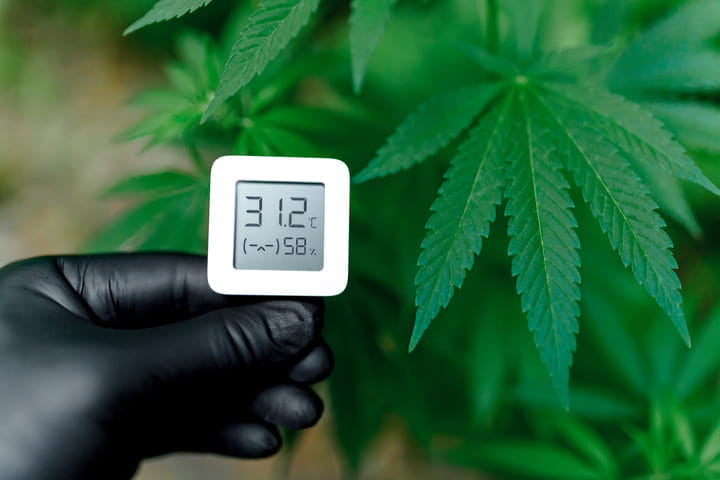
Environmental stressors can also cause stretching. For example, if temperatures consistently exceed 85°F (29°C), your plants might grow taller in an attempt to dissipate heat.
Overcrowding is another issue. Plants crammed too closely together will often grow upward rather than outward in a competition for light and space. This can also reduce airflow, leading to weak stems and additional stress.
Genetics
Genetics play a major role. Sativa-dominant strains are naturally inclined to grow tall, especially during the early flowering stretch. If you’re growing a tall variety, height management becomes even more important.
Training Techniques to Control Height
Now that we’ve identified the causes, let’s explore some practical ways to control plant height using common training methods.
LST (Low Stress Training)
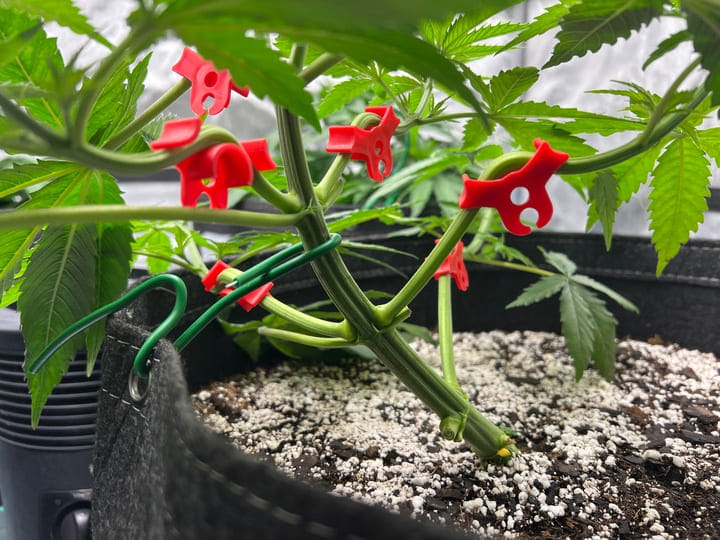
LST is a plant training technique that involves gently bending and tying branches down to create a flatter, wider canopy. This encourages lateral growth and helps expose more bud sites to light. Start LST 2–3 weeks into veg using soft ties or garden wire, and always bend carefully to avoid snapping branches.
Topping
Topping is a more aggressive method that involves cutting off the main top of the plant above the 4th or 5th node. This stops upward growth temporarily and redirects energy to side branches, promoting a bushier plant with multiple colas. Only top during the vegetative stage for best results.
Further Reading:The Difference Between Topping And Fimming
Screen of Green (ScrOG)
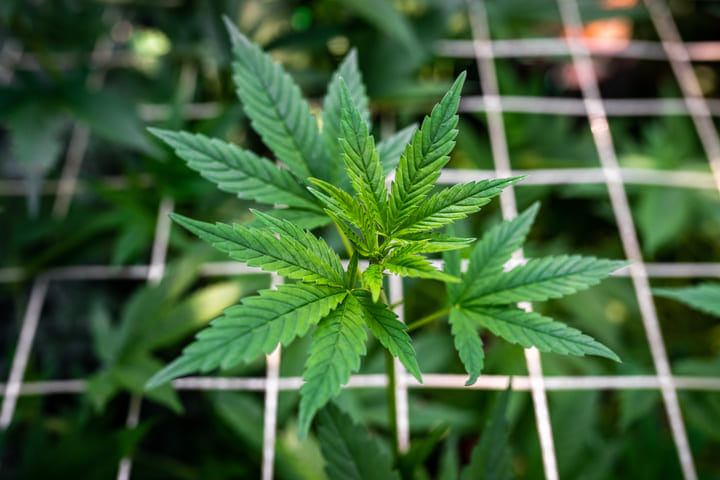
ScrOG uses a horizontal net or trellis to train branches horizontally, creating a flat and even canopy. If a branch grows above the screen, gently tuck it back under. This maximizes light exposure while controlling height.
Super Cropping
Super cropping is an advanced method where you pinch and soften stems so they can be bent sideways without snapping. It’s useful for controlling very tall plants late in veg, but should be done cautiously.
Environmental Adjustments to Prevent Stretch
Beyond training, environmental tuning is essential for minimizing unwanted stretch.
Optimize Lighting
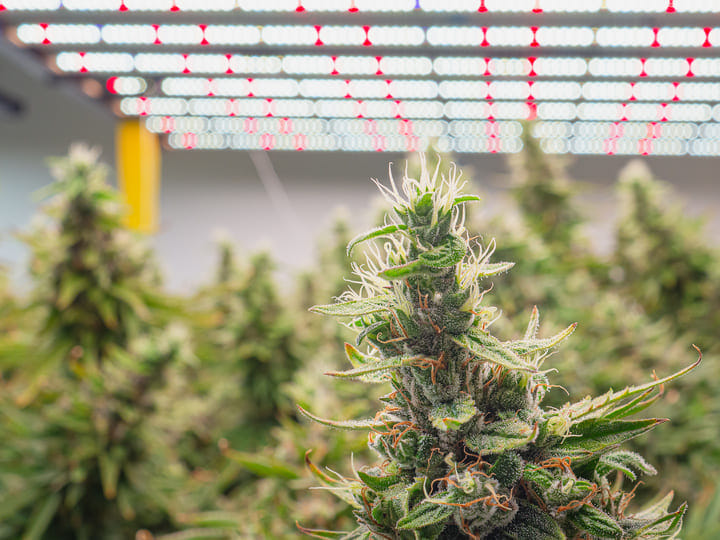
Use full-spectrum LED grow lights that provide strong blue light during veg and a balanced spectrum in flower. Keep lights at the recommended distance—usually 12 to 18 inches away from the canopy. Too much red light during veg or lights placed too far away are common mistakes that lead to stretching.
Control Temperature
Keep daytime temps below 85°F (29°C) whenever possible. Also, maintaining a night temperature that’s slightly cooler (by around 5–10°F) than daytime helps reduce excessive stretch.
Increase Airflow
Good airflow strengthens stems and simulates natural wind conditions. This helps plants stay sturdy and discourages lanky vertical growth. Oscillating fans are ideal for promoting airflow across your grow space.
Further Reading:How To Position Fans In An Indoor Grow Tent
Strain Selection & Timing Tips

Being intentional about the strains you grow and when you flip to flower can help prevent height issues.
· Indica strains tend to be shorter and bushier, making them more manageable indoors.
· Sativa strains often grow tall and require more height control.
· Flip to flowering when your plant reaches about half the desired final height, as most plants will double (or more) in size during early flower.
Final Thoughts
Stretching is a normal part of cannabis growth, especially in the flowering transition—but too much can lead to problems. By understanding the causes, using proper training techniques, managing your environment, and selecting strains wisely, you can keep your cannabis plants at an ideal height and maximize yield. With a little planning and attention, you’ll avoid the stretch and grow strong, compact, and healthy plants. For more details on how to grow cannabis indoors, check out my book 7 Steps To Grow Cannabis. It’s a complete beginner’s guide to growing cannabis indoors. You can get it on my website, or on Amazon. Happy growing!