


One question that is repeatedly asked in online healthcare forums concerns the possibility of using cannabinoids to treat medical conditions in pets. After all, the anti-inflammatory, anti-seizure and analgesic effects of weed work wonders in humans, so it’s only logical to want to share those benefits with our four-legged friends. However, giving cannabis to cats is not so straightforward and can be dangerous without the guidance of a vet.
How Does Cannabis Affect Cats?
Like all mammals, cats have cannabinoid receptors throughout their brain and central nervous system. This means they possess both cannabinoid 1 (CB1) and cannabinoid 2 (CB2) receptors, which act as the primary targets for tetrahydrocannabinol (THC) and cannabidiol (CBD), respectively.
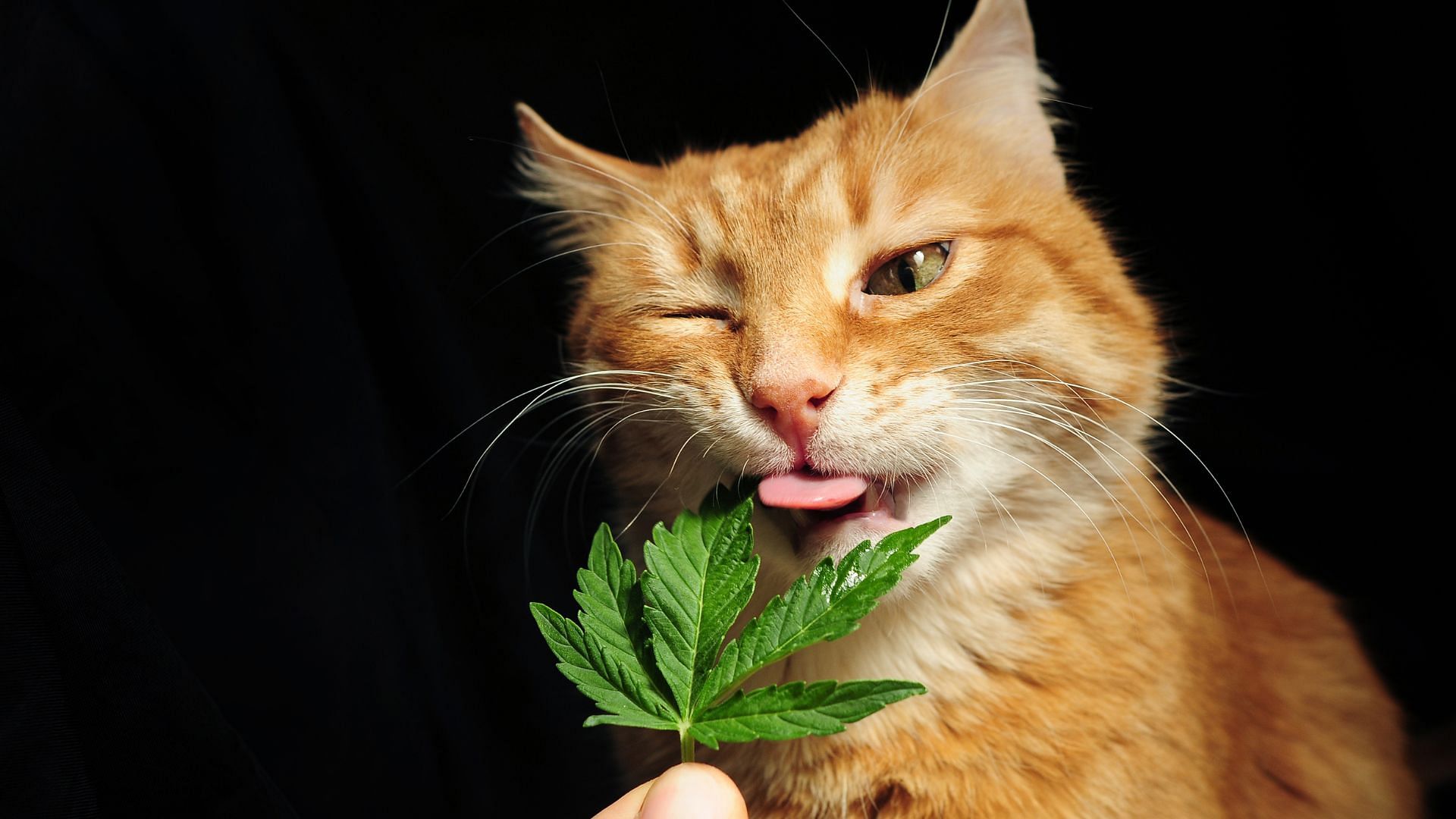
However, research has indicated that cats have a higher concentration of CB1 receptors than humans. This, combined with their much smaller size and body weight, makes them considerably more sensitive to THC than we are.
In us two-legged folk, THC binds to CB1 receptors to produce feelings of euphoria and relaxation, stimulate the appetite and relieve pain. Yet cats who consume cannabis are likely to have a less pleasant ride and can experience a range of adverse side effects from even a small amount of THC. The cannabinoid is actually considered to be toxic for felines, so it’s best to keep your stash well away from any curious cats.
How Dangerous Is THC For Cats?
There hasn’t been much research on the impact of cannabis on cats, but the few studies that do exist highlight the toxicity of THC. Based on this limited research, it appears that cats become sedated, lose their coordination and occasionally begin trembling when exposed to high concentrations of THC.
Fortunately, the dose of THC required to do permanent damage is much higher than any cat would ever ingest in the real world, so don’t expect your pet to suddenly drop dead if they get their paws on your weed. According to the academic literature, cats that consume cannabis tend to become lethargic and may vomit but are likely to recover from the ordeal with no lasting damage.
Due to an overall lack of research, the actual toxic dose of THC for cats is unknown. Still, it’s probably best not to try and find out, as it’s clear that even a little weed can mess a moggy up.
Can Cats Take CBD?
A few studies on the benefits of CBD for pets are beginning to trickle through, although there’s not yet enough data for vets to reliably recommend the cannabinoid for any non-humans. So far, most research has been done on dogs, with one recent study finding that CBD reduces pain and increases mobility in canines with osteoarthritis[i].
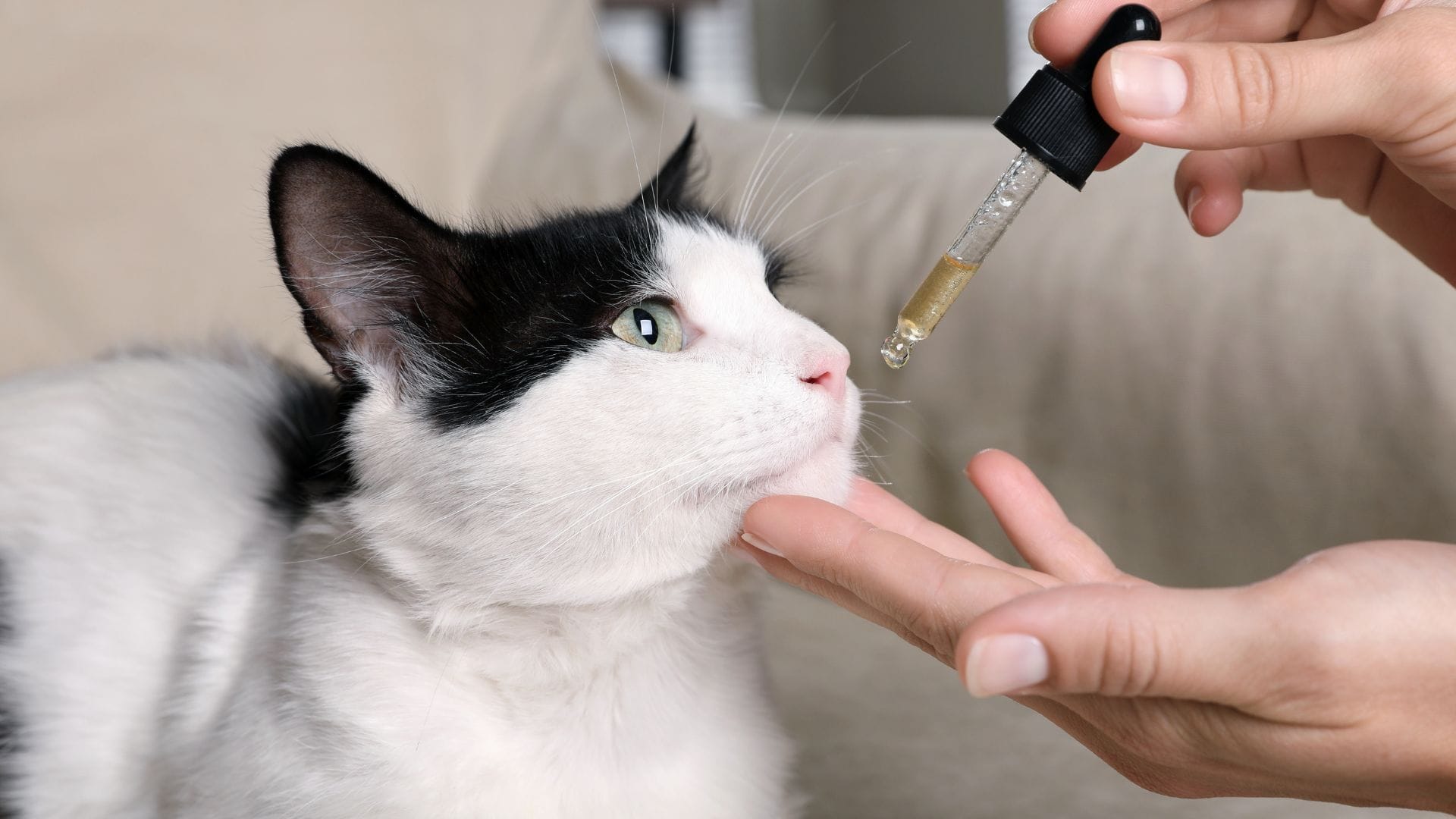
Another study showed that the cannabinoid reduces seizures in epileptic dogs[ii]. However, similar research has yet to be conducted on cats, and it’s impossible to say if these benefits translate to different species. Other small-scale studies have indicated that CBD reduces chronic pain in horses. At the same time, a zoo in Poland recently treated its elephants with the cannabinoid to help them deal with grief and stress following the death of their matriarch.
As for cats, it’s still unclear exactly how much benefit CBD provides. A few recent studies have tentatively concluded that the cannabinoid may help to treat chronic pain in cats, although no major trials have been conducted on felines. Similarly, some anecdotal evidence suggests that CBD might alleviate anxiety in cats, but it’s very difficult to draw any firm conclusions without placebo-controlled clinical trials involving many animals.
Having said all that, some vets may still recommend treating cats with CBD, so it’s always worth asking your pet’s healthcare provider for their opinion. It goes without saying, though, that you should never give a cat cannabis without first consulting an expert.
What To Do If Your Cat Ingests Cannabis
If you think your cat might have consumed cannabis, contact your vet immediately. Keep a close eye on your pet and note any symptoms that start to show, including vomiting, lethargy or changes in the amount of urine they produce.
Depending on the severity of the case and how quickly you can get help, a vet may decide to induce vomiting to get any remaining weed out of your cat’s belly. Alternatively, your pet may be given activated charcoal to soak up some of the cannabinoids.
Some cats may even receive anti-nausea medications or be put on a drip to keep them hydrated, while the vet will probably also make sure that the stoned puss is confined in a quiet, comfortable spot. In most cases, though, the only thing you or your cat will be able to do is waiting it out.
As previously mentioned, most cats who ingest cannabis recover fully, although some older animals or those with underlying health problems may be more vulnerable.
How To Protect Cats From Weed
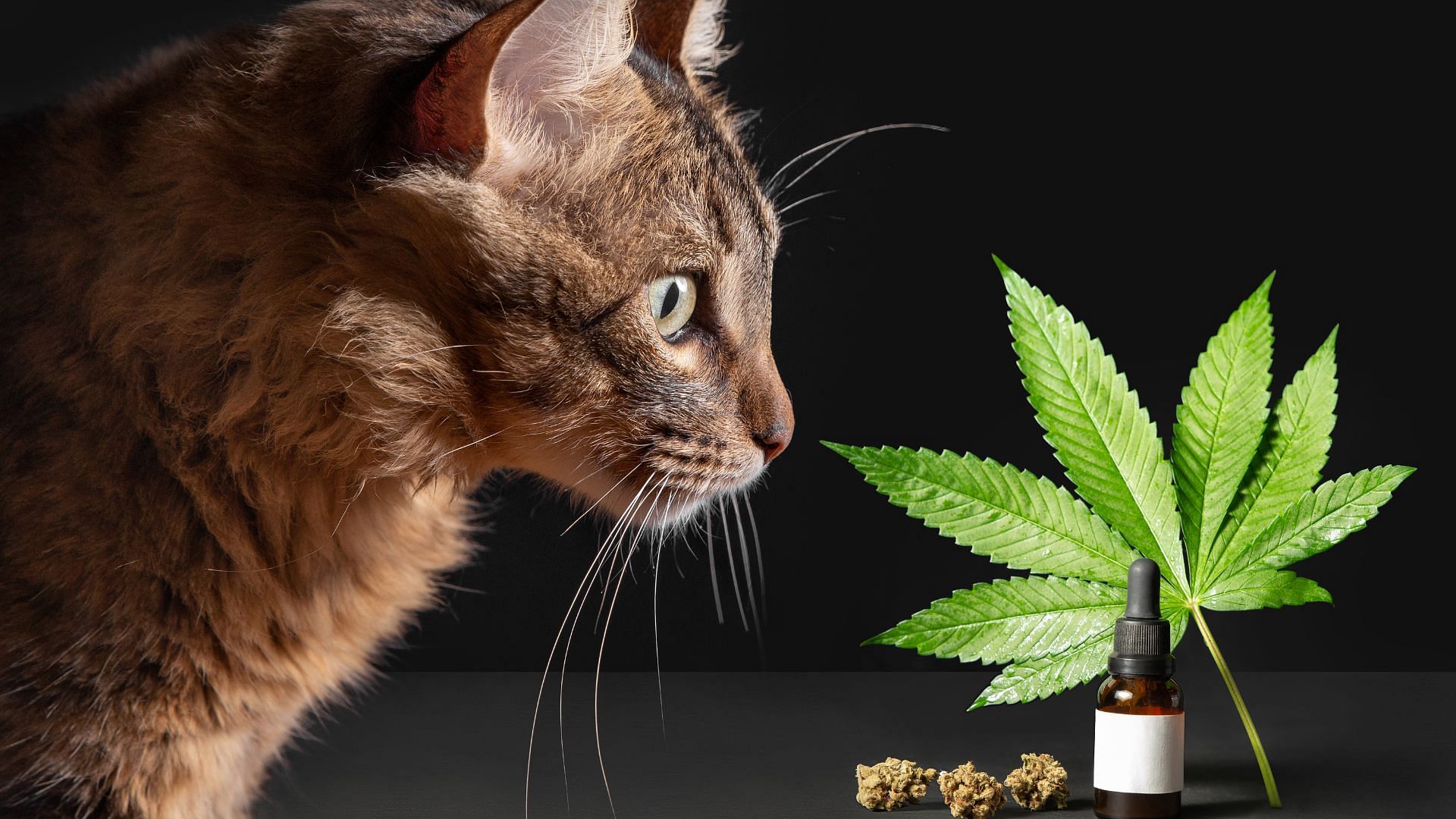
Since cats are more sensitive to THC than humans, it’s wise to avoid smoking too close to your pet. If you’re inside and the room isn’t particularly well-ventilated, make sure your feline friend is nowhere to be seen before sparking up a joint. Even passive smoke can be dangerous for a cat if they inhale too much of it, and the last thing you want to deal with is a cat greening out while you’re high.
It’s also worth remembering that many edibles contain extra ingredients that are harmful to cats. Chocolate, for instance, is toxic to felines, so you definitely don’t want your pet to get its paws on your hash brownies. Likewise, cannabutter contains high amounts of fat and can trigger pancreatitis in cats that eat too much of it – and that’s before we’ve even talked about the cannabinoids.
Remember, weed ain’t no catnip, and cats who consume cannabis can have severe side effects. Even if they recover from the ordeal – which hopefully they will – it’s not fair for an owner to put their pet through such a terrifying experience. Do the responsible thing and take precautions to ensure your cat never gets anywhere near your weed unless a vet has advised you to treat your cat with CBD.
[i] Gamble LJ, Boesch JM, Frye CW, Schwark WS, Mann S, Wolfe L, Brown H, Berthelsen ES, Wakshlag JJ. Pharmacokinetics, safety, and clinical efficacy of cannabidiol treatment in osteoarthritic dogs. Frontiers in veterinary science. 2018:165. - https://www.frontiersin.org/articles/10.3389/fvets.2018.00165/full?fbclid=IwAR1S16ZSa-DktbvZ1wHFczaD_JV8Eg8mjQqtlNJi8Z0t0xpBGskl2J364no
[ii] McGrath S, Bartner LR, Rao S, Packer RA, Gustafson DL. Randomized blinded controlled clinical trial to assess the effect of oral cannabidiol administration in addition to conventional antiepileptic treatment on seizure frequency in dogs with intractable idiopathic epilepsy. Journal of the American Veterinary Medical Association. 2019 Jun 1;254(11):1301-8. - https://avmajournals.avma.org/view/journals/javma/254/11/javma.254.11.1301.xml


