

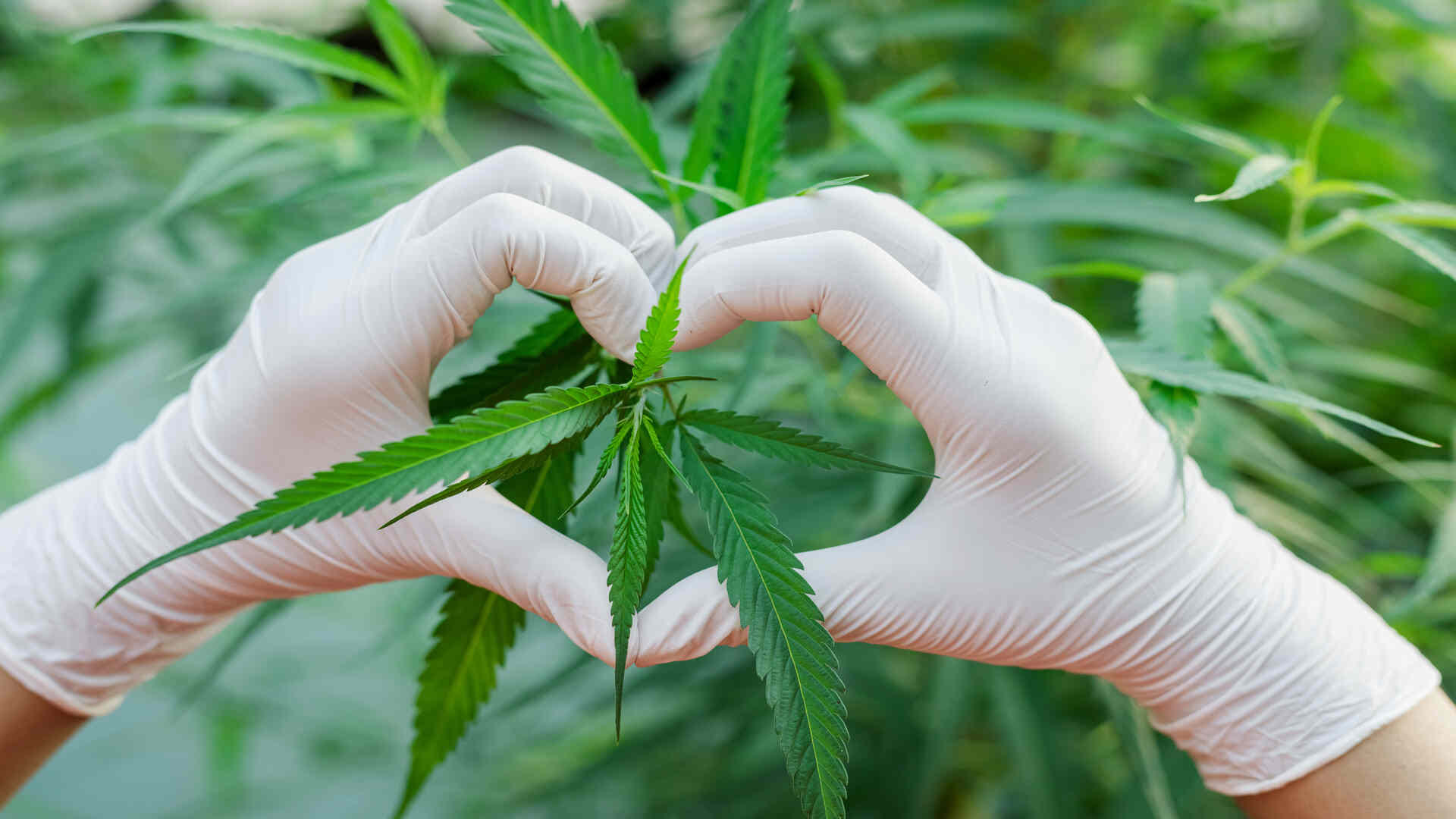
If you're kicking off 2026 with a New Year's Resolution to finally start growing weed - congratulations. Rather than tell you it's about time, instead we'd like to welcome you the club. Growing weed is one of those rare hobbies that manages to be both universal and deeply personal. Every grower, whether they're working from a spare cupboard in a cold Scottish flat or tending a sun-drenched balcony in California, is ultimately trying to do the same thing: create the right balance of light, air, water, nutrients, genetics, and patience. The fundamentals never change - but the way you apply them absolutely does. But don't be put off by that list of plates you'll have to spin - it might look intimidating on paper, but you, like hundreds of thousands of successful cultivators worldwide, will come to understand this, manage it, and learn how to grow weed you can be proud of.
Many grow guides fall short because they assume perfect conditions, top-notch gear, and unlimited funds. But real growers know better. Real growers adapt. And that's exactly what this guide is about: showing you it's possible to learn how to grow weed anywhere, in any climate, in any space, and on any budget - without sacrficing quality or your own sanity.
How To Grow Weed Anywhere: Begin by Understanding your Environment
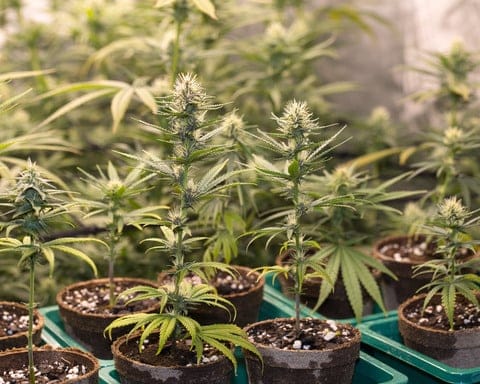
Before you buy a single piece of equipment or germinate a cannabis seed, take a moment to assess what you're working with. Your environment dictates everything - from the genetics you need to the equipment you choose, and the techniques that will actually work. Temperature swings, humidity levels, available space, noise tolerance, and even your electricity budget all play a role. A grower in a humid apartment faces very different challenges from someone growing outdoors in a dry inland climate. And someone growing in a loft with a sloped ceiling has a very different relationship with gravity than someone using a tall tent.
The more honestly you evaluate your starting point, the easier it becomes to build a setup that works with your environment instead of contantly fighting it. So, when it comes time for you to choose where and how to grow weed, you have some questions to ask yourself:
- Where do you want to grow? Indoors, or outdoors? If indoors, will you choose a room, a grow tent, a closet - or maybe even a micro grow? If outdoors, will you go with some garden space, or a dedicated greenhouse?
- How much weed do you want to produce? Just enough for personal use? Have you checked the local laws in your area?
- Are you growing for recreational or therapeutic use?
These questions will go a long way to help determine your setup - everything from location to equipment and ultimately which genetics you choose.
How To Grow Weed Anywhere: Choosing an Indoor Grow
Indoor growing is essentially climate control theater. You’re building a tiny artificial world where cannabis can thrive regardless of what the weather is doing outside. The beauty of indoor cultivation is that almost any enclosed space can be transformed into a functional grow area — a tent, a cupboard, a loft, a basement, even a converted piece of furniture if you’re feeling particularly creative. The trick is understanding your environment, and learning to control it.
Lighting an Indoor Cannabis Grow
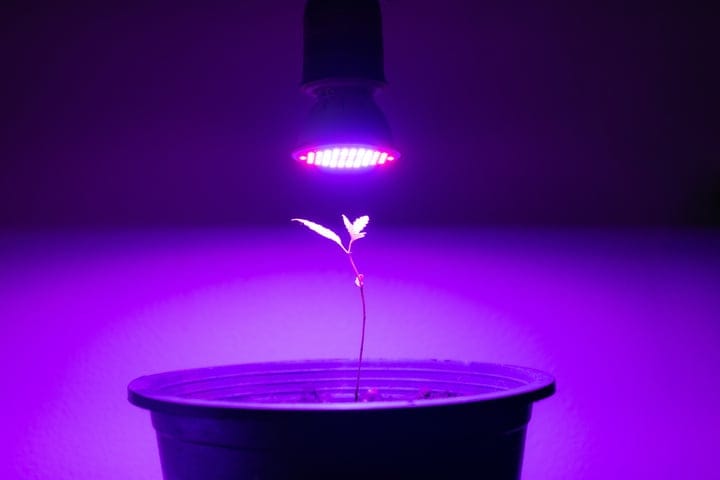
Lighting is at the heart of how to grow weed indoors. Modern full‑spectrum LEDs have become the gold standard thanks to their efficiency, cool operation, and impressive yields. Skilled growers will routinely achieve between 1.8 and 2.5 grams per watt with good LEDs, which is more than double what older HID systems typically managed. But even the best light setup needs to be used intelligently. Hanging your grow light at the manufacturer’s recommended height is only a starting point. Every strain has its own light tolerance, so it’s worth beginning a little higher and lowering gradually while watching leaf posture. Leaves that gently “pray” upwards are happy; leaves that canoe or curl are telling you the light is a bit too close. You're then at risk of light burn and plant damage.
Airflow in an Indoor Cannabis Grow: Not to be overlooked
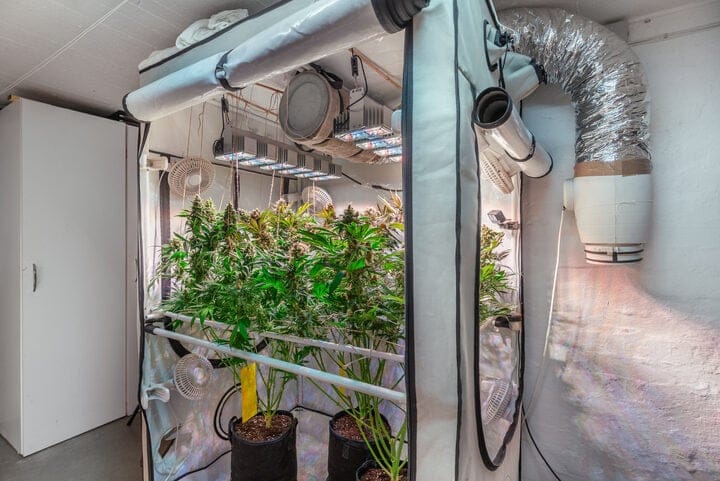
Airflow is the next piece of the puzzle, and it’s astonishing how many growers underestimate it. Good airflow strengthens stems, prevents mold, and helps maintain stable temperatures. Your extraction fan should be strong enough to replace the air in your tent every one to three minutes, and depending on grow size, one or a few small oscillating fans inside the space keeps air moving without blasting the plants directly. If your tent walls are sucking inward dramatically, your extraction is too strong - a passive intake or small intake fan will balance the pressure and give your plants room to breathe. Learn how to position fans in a grow tent, and it's half the battle.
Temperature and Humidity - Necessarily Elements of How To Grow Weed
Temperature and humidity control can seem overwhelming to newcomers, but this is an area where indoor growers earn their stripes. If you're going to learn how to grow weed anywhere, keeping an eye on these to factors is key. Cannabis prefers temperatures around 24–28°C in veg and 20–26°C in flower, with humidity gradually decreasing as the plant matures. Cold-climate growers often rely on small oil‑filled radiators or insulated tents, while hot‑climate growers may run lights at night, increase extraction, or use dehumidifiers to reduce heat stress. If you really want to take things to the next level, learn about Vapour Pressure Deficit (VPD). It’s one of the most powerful — and most ignored — tools for improving nutrient uptake and overall plant health.
How To Choose The Best Seeds For Indoor Growing
Choosing the best cannabis seeds for indoor growing is really about stacking the odds in your favor before you even pop the first bean. Indoors, you control the environment - so the smart move is to choose genetics that reward that control. Start with feminized seeds. Unless you're breeding, there's little reason to risk males in such a confined space. Feminized seeds maximize canopy efficiency and ensure every plant contributes to your final yield - and in a small space that may only be 1-2 plants, so you don't want to take any chances. If space or time is tight, autoflowering seeds are also worth considering. Modern autos offer impressive potency and predictable life cycles that suit small tents and faster turnarounds.
Next, when thinking about how to grow weed, think about plant structure. Cmpact, indica-leaning strains or hybrids bred specifically for indoor cultivation tend to manage height better and respond well to training techniques like LST or SCROG. This helps keep that all-important light penetration even and prevents overcrowding under artificial lighting.
Don't overlook breeder reputation. Stable genetics mean consistent growth, uniform flowering times and fewer surprises. Choose wisely and your indoor garden will reward you. If you need some additional help, check our beginner's guide to choosing cannabis strains.
How To Grow Weed Anywhere: Choosing an Outdoor Grow
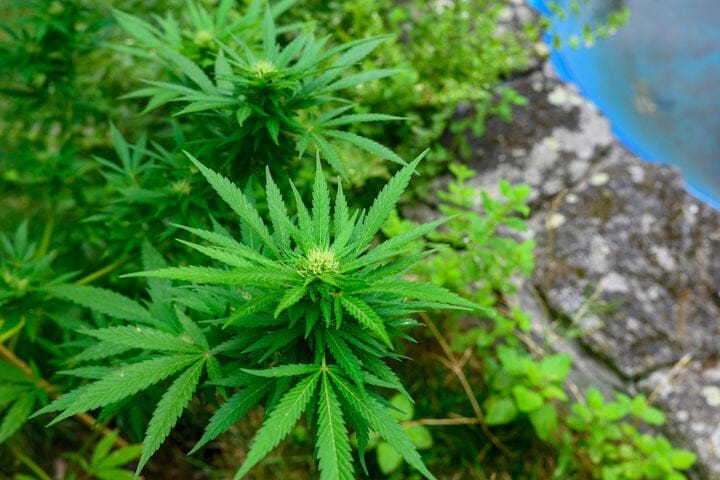
Outdoor growing is the oldest method of producing weed, and still one of the most rewarding. There’s something deeply satisfying about watching a plant thrive under natural sunlight, even if mother nature occasionally tests your resolve by throwing a tantrum. But the great outdoors is not just great for how to grow weed - it's great for you, too! Spending time in the great outdoors enriches lives, and it's great for the soul. The challenge, of course, is that you’re no longer in full control of the environment. Climate, weather patterns, pests, and even neighbours all become part of the equation.
The first step is choosing the right spot for your outdoor grow, and that will largely be dictated by sunlight hours and shade. The next step is choosing genetics that suit your climate. A long‑flowering tropical sativa is unlikely to finish in a short, wet northern summer, no matter how optimistic or how skilled you are. Cold or damp regions benefit from fast‑flowering indicas, mold‑resistant hybrids, and autoflowers. Hot, dry climates are perfect for sativas and landrace hybrids that evolved to handle heat. If your climate is unpredictable — and let’s be honest, it feels like most are these days - autoflowers offer a reliable way to dodge seasonal surprises. Cannabis expert Jorge Cervantes has a great article right here on the blog on choosing autos and what beginners need to know.
Soil quality varies wildly outdoors, so it’s worth testing pH and amending with compost, worm castings, and perlite if needed. Container growers should choose pots large enough to support vigorous root systems — 30–50 litres for autos and 50–100 litres for photoperiods. You can amend your soil for maximum growth potential and protection, and mulching is one of the simplest but most effective outdoor techniques. A layer of straw or bark helps retain moisture, stabilize soil temperature, and encourage beneficial microbes.
Plant Training Techniques For Outdoor Growing
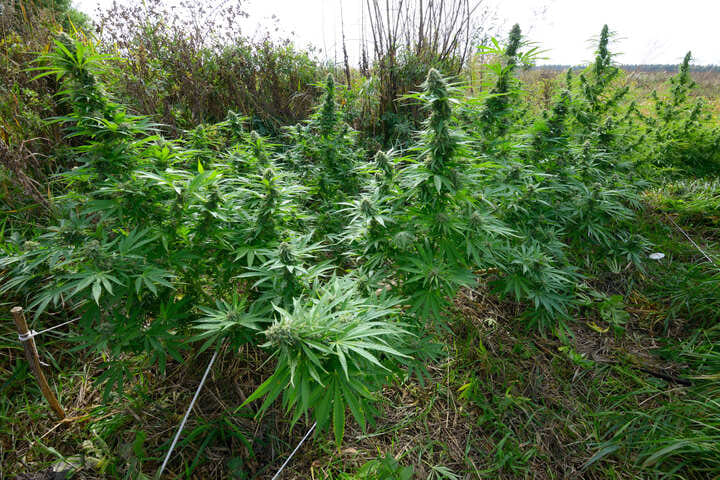
Outdoor plants can also get enormous, which is wonderful unless you’re trying to stay discreet. Plant training techniques like topping, low‑stress training, and netting help keep plants manageable. Companion plants such as lavender, rosemary, and sunflowers can also provide natural camouflage while attracting beneficial insects - both of which are hugely advantageous for an outdoor cannabis grow.
How To Grow Weed Anywhere: Managing In Cold Climates
Cold climates present a unique set of challenges. Low temperatures slow growth, reduce root activity, and increase the risk of mold. Indoor growers in cold regions often rely on insulated tents, thermostatically controlled heaters, and warm nutrient solutions. Keeping the root zone above 16°C is crucial — cold roots stall growth faster than almost anything else. The good news? Something as simple as placing a heat mat under your pots can make a dramatic difference.
Outdoor growers in cold climates need to be strategic. Raised beds warm faster than ground soil, black pots absorb heat, and starting plants indoors before hardening them off gives them a head start. For a genetic advantage, early or fast‑flowering strains and autoflowers are your best allies when the growing season is short.
How To Grow Weed Anywhere: Dealing With Hot Climates
Excessive heat can be just as problematic as cold. High temperatures cause stress, foxtailing, reduced terpene production, and airy buds. Indoor growers in hot regions often run lights at night, increase airflow, or switch from HID to LED to reduce heat output. Keeping nutrient solutions cool — ideally around 18–20°C — helps prevent root stress. Silica supplements are one of the few additives with consistently proven benefits in hot climates. They strengthen cell walls and improve heat tolerance, giving plants a fighting chance when temperatures climb.
Outdoor growers in hot regions should provide partial shade during peak hours, water early or late in the day, and use large fabric pots to improve root aeration. Mulching becomes essential to prevent rapid evaporation. Genetically speaking, this is where you can get away with growing those tall sativa varieties - they adapted to hot weather climates naturally, and have a tendency to do well in sunnier climes.
Small Spaces: Making Every Inch Count
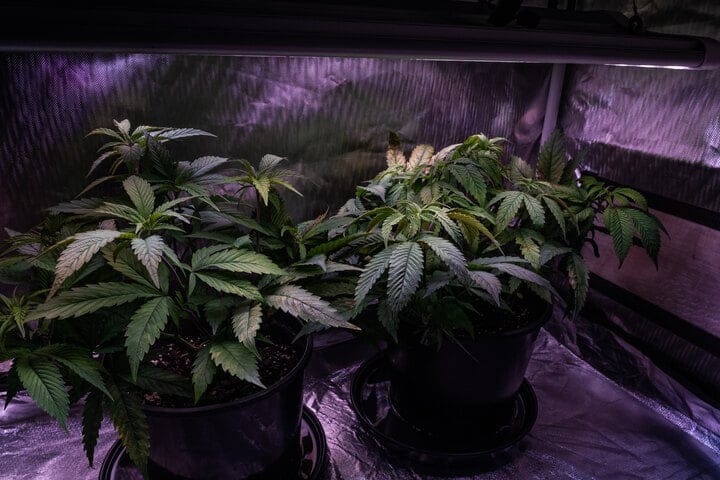
Not everyone has the luxury of a dedicated grow room, and honestly, most growers don’t start with one. Plenty of brilliant harvests have come growers who learned how to grow weed in cupboards, closets, loft corners, and tents so small you’d swear they were designed for houseplants rather than cannabis. The key in tight spaces is learning to think vertically, horizontally, and occasionally diagonally.
This is where genius cannabis breeders come into their own. Necessity has long been deemed the mother of invention, and we can now boast some fantastic compact cannabis varieties that take up very little space. Compact genetics make life so much easier for indoor growers with limited room. Indicas, autoflowers, and well‑behaved hybrids tend to stay manageable, especially when you guide them with plant techniques such as topping or low‑stress training. A single well‑timed bend early in veg can save you weeks of wrestling with a plant that wants to impersonate a Christmas tree later in life. SCROG nets are another excellent tool, turning a small footprint into a productive canopy by encouraging lateral growth instead of height.
It's crucial to be aware that good airflow becomes even more important when space is limited. Stale air builds up quickly, and humidity spikes can happen in the time it takes to make a cup of coffee and roll a joint. A small oscillating fan and a properly sized extraction system keep the micro‑climate stable, and needn't break the bank, either. Even something as simple as lining the walls with reflective material can make a noticeable difference — Mylar or even a clean white surface helps bounce light around, squeezing every lumen out of your setup.
Small spaces definitely demand discipline and attention to detail, but they reward it with efficiency. Once you learn how to shape plants to the environment rather than the other way around, you’ll be surprised at how much you can produce from a footprint barely larger than a bedside table.
Growing on a Budget: Spending Smart Instead of Spending Big

There’s a persistent myth that good cannabis requires expensive equipment. It certainly doesn’t. What it requires is thoughtful spending. Lighting and genetics are the two areas where investment pays off most clearly. A reliable LED and quality seeds will outperform a room full of bargain‑bin gear every time - but you don't have to break the bank to put together a decent beginner setup that can yield awesome weed..
Nutrients, on the other hand, are where many growers often overspend. Cannabis doesn’t need a dozen bottles of additives with names that sound like energy drinks. A simple three‑part nutrient line, plus calcium and magnesium if your water is soft, is more than enough to produce healthy, vigorous plants. Soil mixes can be made at home for a fraction of the cost of branded blends, and second‑hand tents or fans are perfectly acceptable as long as they’re clean and functional.
Budget growing is really about understanding what matters. Plants don’t care whether your equipment is shiny or expensive — they care about stability, consistency, and the fundamentals being dialled in. If you can provide those, you can grow excellent cannabis without emptying your wallet. Here on the Seeedsman blog, we promote sustainable cannabis growing, and you'll find energy saving tips to help your wallet and the environment.
Bonus Tips on How To Grow Weed Anywhere
Once you’ve mastered the basics, there are a few advanced techniques that can knock your grow up a notch from “good” to “why is there line of pot-heads outside waving wads of twenties at me?". Root zone oxygenation is one of the most overlooked factors. Take time to understand the root zone of your cannabis plants. Roots thrive when they have access to oxygen, so using fabric pots, adding perlite to soil, and allowing proper dry‑back cycles all contribute to stronger, more efficient plants.
Light spectrum manipulation is another powerful tool. Blue light encourages compact, bushy growth, while red light promotes stretch and flowering. If your LED allows spectrum control, you can fine‑tune the plant’s behaviour throughout its life cycle. A small amount of UVB in late flower can even increase resin production, though it should be used sparingly and with respect — UVB is powerful stuff. Oh, and let's not forget how supplemental and side lighting can help with indoor yields.
Microbial inoculation is also worth exploring. Beneficial microbes such as mycorrhizal fungi and Bacillus species help improve nutrient uptake and root health. Trichoderma can be incredibly effective too, though it’s aggressive enough that it should be used intentionally rather than casually thrown into the mix.
Finally, consider staggered harvesting. Not all buds ripen at the same pace, especially on larger plants. Taking the top colas first and allowing the lower buds another week or so can improve both yield and uniformity. It’s a small adjustment that often pays off handsomely.
And of course, no guide would be complete without mentioning drying and curing — the stage where many great grows go to die. Slow, controlled drying at around 18–21°C and 50–60% humidity, followed by a patient cure, is the secret to preserving terpenes and achieving that smooth, flavourful finish. You can grow the best cannabis in the world, but if you rush the dry, you’ll never taste it. Skip on over to our article on drying and curing cannabis to get clued in like a pro.
You Really Can Grow Weed Anywhere
Cannabis is a remarkably adaptable plant, and growers are just as adaptable. Whether you’re working with a tight budget, a challenging climate, or a space that barely fits a houseplant, you can still produce exceptional results with the right approach. Understand your environment, choose genetics that match it, and make small, thoughtful adjustments along the way. That’s the real secret of how to grow weed anywhere. You'll find great resources from professional cultivators right here in the Seedsman blog to help you every step of the way - and genetics for every growing setup and style.
Make 2026 the year you grow your best weed ever!


