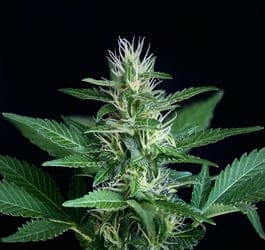
When it comes to cannabis cultivation, many methods can yield great results. Whether growing autoflowers or 15-week-flowering sativa varieties, it is no surprise to learn that there are an array of differences as well as similarities between the different approaches. One consistent thing growers of all kinds are looking for when growing finished flowers is compact and dense buds. In this article, we cover keeping plants compact and how to make buds more compact.
It All Starts With The Genetics
Selecting cannabis varieties that are naturally compact and bushy (Indica-dominant varieties typically fit this mould) is a good start. However, growth rates, branching tendency and even node length can be important factors for optimising compact cannabis plants. The ideal scenario is a small, multiple-branched plant with dense colas on every branch and short canopy depth, making it consistent and without secondary or tertiary-grade buds. Otherwise, the use of autoflowering varieties might be a good option. Autoflowers stay shorter and stockier and can be grown in small spaces. However, many autoflowering varieties do not respond well to some of the points made in this article. Therefore, any hands-on actions to make autoflowering cannabis more compact should be carried out with extra care.
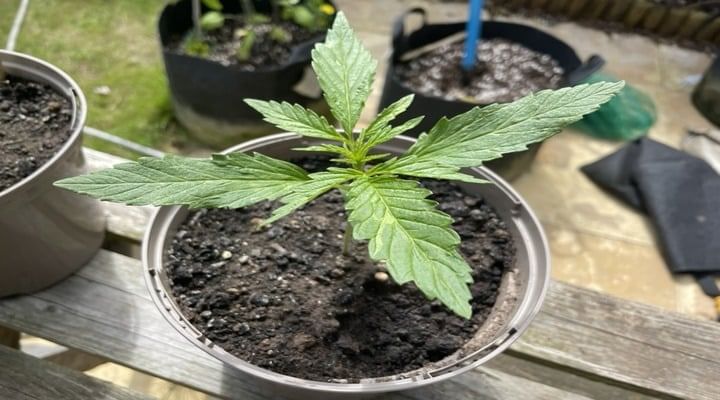
However, managing the grow is managing the grow and thus should be achievable with the correct combination of factors. If a grower is married to the genetics they use and wants to change their growing style, it might be difficult to apply this compact approach. However, if recommendations are needed, then Strawberry Cheesecake Auto, Green Crack Auto, Purple Oreoz F1, OG Kush, and Gelato41 are good options for compact growing.
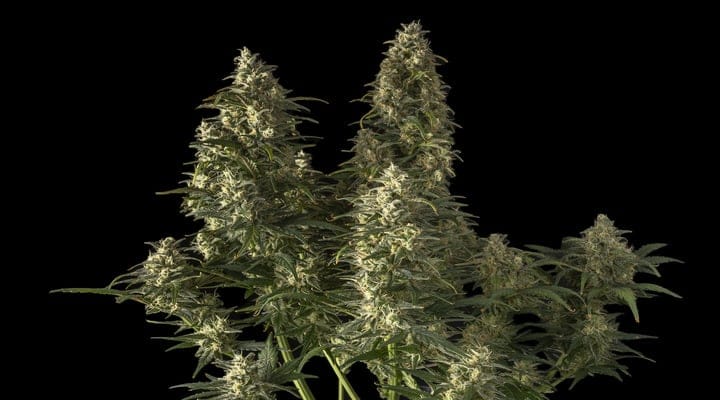
Compact Plants: Controlling Root Mass
Managing the root mass is a great way to keep cannabis plants small and compact – think bonsai! The size of the rooting mass is often correlated to the size of the plant, with the caveat that growers aren't force-feeding the plant roots high levels of nutrients. It is key to find a nice balance and provide adequate but not excessive nutrients, as the objective is to keep the plant small. The roots of the cannabis plant can influence the overall growth pattern of the aerial part of the plant to a certain level. For example, using smaller pots or containers can restrict arial growth, thereby keeping the plant itself more compact. Again, depending on the genetics used, there is a point in which holding the plant back too much can have an overall negative effect. While fast growth is usually encouraged, slower growth rates with slow-release fertilisers may be better for compact plants – although dependent on the situation and growing environment.
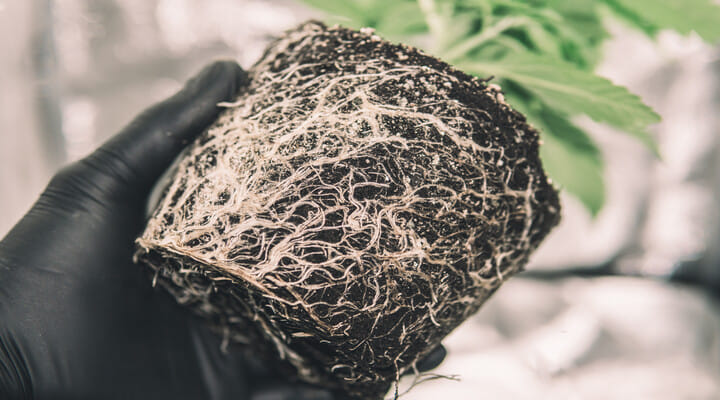
Some growers use techniques like root pruning, where periodically trimming the roots can lead to better root health and a more controlled plant size. Using air pots and fabric pots are excellent choices to avoid manual pruning as they stunt the elongation of roots, which helps them develop a more lateral 'branched' rooting network. Many of the same rules apply to compact plants as large plants, such as no excessive watering, keeping them healthy and disease-free, and plenty of direct light.
Compact plants: Pruning and Training
In conjunction with controlling the root mass, pruning and training techniques are almost essential for maintaining a compact-sized plant. However, getting this right can be tricky, as pruning can cause an excessive number of lateral branches to develop. With a compact plant, the combination of removal of the undergrowth and the excessive pruning can really affect the plant's well-being (growth rate). For this reason, how a plant is trained before the pruning begins can make the job easier if done correctly.
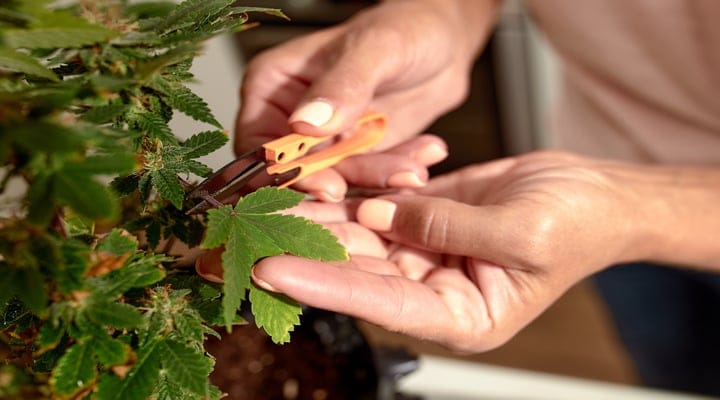
Early pinching and mainlining can really help growers control the architecture of the plant ready for later stage pruning. Once the architecture starts to take shape, topping the elongating branches to the secondary nodes will keep the plant compact. The pruning should also involve removing lower leaves and small branches that will not receive enough light and, therefore, produce underdeveloped buds. This stripping of the undergrowth will not only help in controlling shape and growth but can also improve airflow through the canopy. This is important for maintaining good plant health and avoiding issues like bud rot.
Dense buds: Changing the light schedule
Whether a plant is compact or not, improving the bud structure is possible. The light schedule can play a significant role in the development of buds. With the typical advice stating that in the vegetative stage cannabis plants typically thrive under a light schedule of 18 hours light, 6 hours dark whilst in the flowering stage, switching to a 12/12 is optimal. This is not actually as cut and dry as was once believed. Recent studies have shown how the duration of the light and dark can really influence the structure of the buds during flowering.
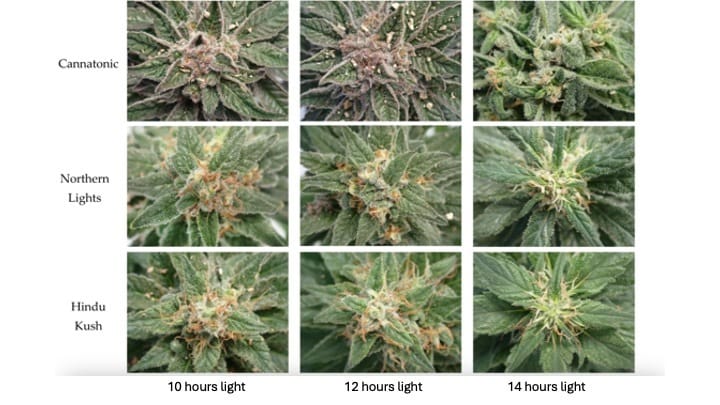
The short version of the findings is as follows:
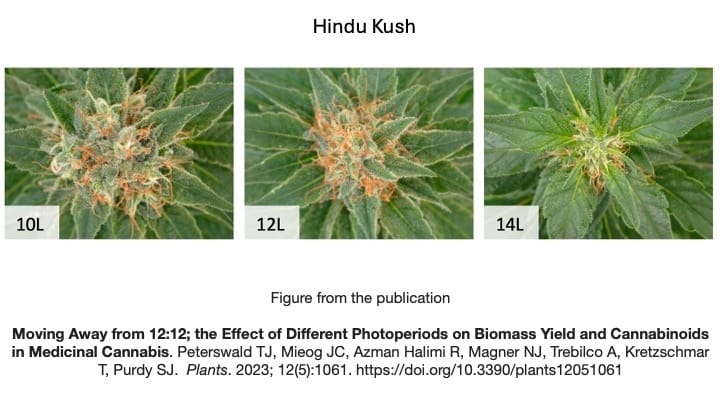
Reducing the day length to 10 hours of light and 14 hours of dark will result in heavier, denser, and more compact buds, compared to, for example, the opposite. 14 hours of light and only 10 hours of dark will produce more elongated buds without the same level of density. There is a point of diminishing returns with this pattern, where reducing the amount of light negatively impacts the plant's overall photosynthetic output. Therefore, changing the light schedule during flowering is the best way to manage it. For example, start flowering on 12/12 light and dark for the first 3 or 4 weeks, then reduce light to 11 hours (13 hours dark) for a week or two and then finally reduce to 10/14 for the remaining weeks. This helps to promote a denser bud structure in most varieties; however, as with most things cannabis, it can be very variety-specific.
Dense buds: High UV
Some studies in this area are inconclusive, while others show no difference. Still, high levels of UV light during the flowering stage can significantly contribute to the density and even the potency of cannabis. UV light, particularly that from strong sunlight, as seen in the Caribbean, improves the buds' density in some way.
Two of Seedsman's staple varieties, Strawberry Banana Grape and Bruce Banger have shown an incredible increase in bud density when grown outdoors in the Caribbean sun. UV readings correlated well with this increase in bud structure, suggesting that UV is the root cause. Even in controlled environments, UV-B has been shown to increase the production of trichomes and bud density. Adding UV lights to a grow room can be done in a number of ways, but it's important to introduce UV light gradually to avoid over-stressing the plants. Plants will try to protect themselves from UV, and one way they do this is by increasing trichome production.

It's wise to only use UV lights for a few hours a day, as excessively light with UV light will cause stress in the first instance, and DNA damage in the second, therefore monitor the exposure duration carefully and see how the plants react. Some prefer to administer short bursts of UV light during the middle of the light period, and this generally helps improve the cannabis without causing noticeable damage.
Conclusion
In a way, cannabis cultivation can be seen as a symbiotic relationship between the grower and the plant. The relationship is cycling observation, adaptation, and evidence to guide the next decision, as the plant responds to the human manipulation. The production of high-quality, compact cannabis is an evolving discipline, with many insights yet to be revealed.
Growing compact cannabis plants can challenge cultivators to try new techniques, sometimes borrowing from other kept plants. The cannabis plant's unique biology, genetics, and ecological interactions allow it capabilities outside of the norm. This is reflected in some of the studies mentioned here. Although the scholarly approach isn't always the most practical, it can elevate our understanding and, therefore, our practice of cannabis cultivation.