

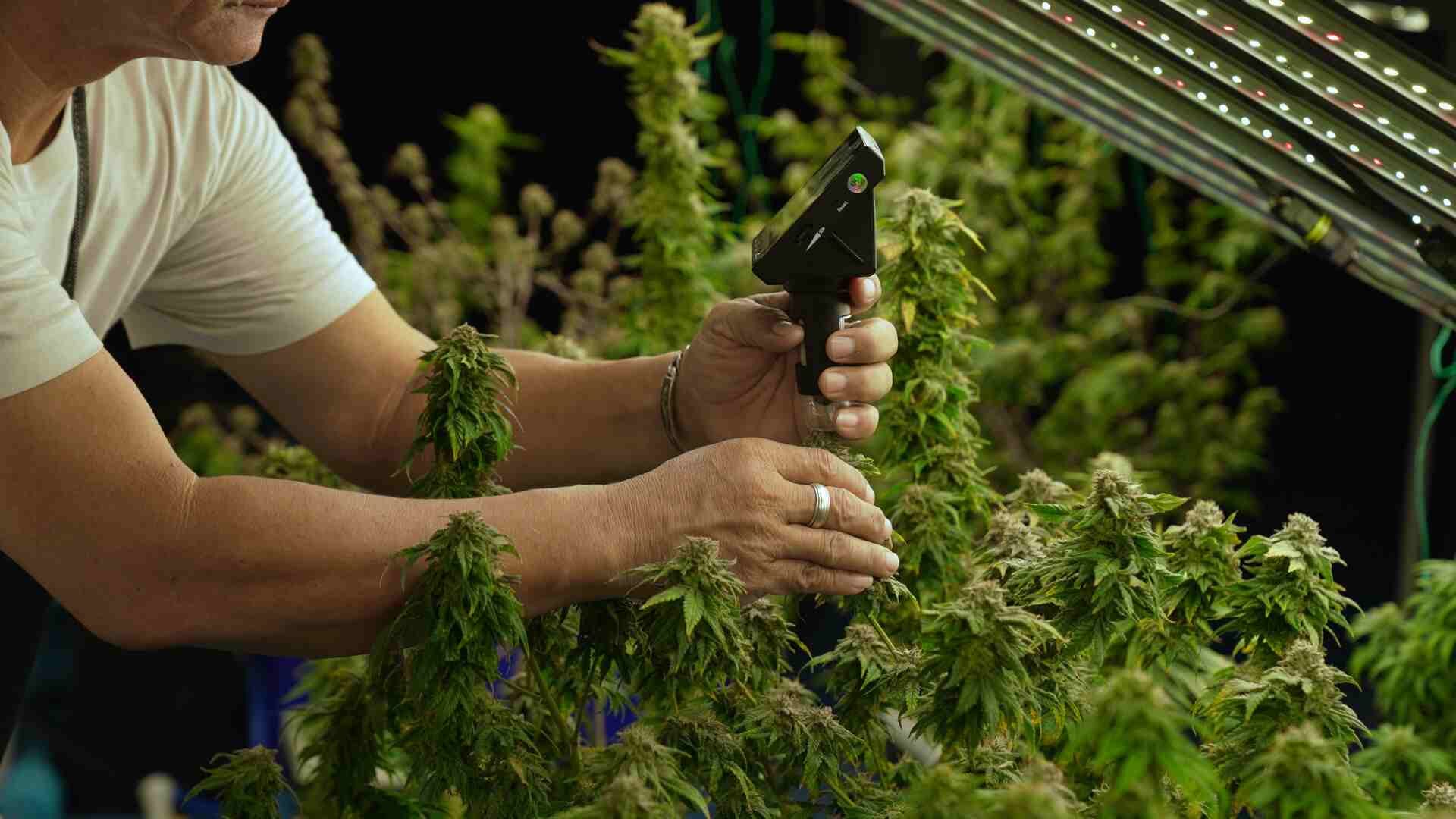
Most cultivation guides quietly assume you've already got the "right" setup. A dedicated room. Controlled airflow. Perfect lighting. Or an ideal space in your garden for growing plants.
In reality, most growers start somewhere far more ordinary. A spare corner. A cupboard. A small tent squeezed into a room that already has another purpose.
The interesting thing is this: plants don't care how the ideal the space looks on paper. They respond to what's actually there. Light, air, consistency, and attention are more effective when it comes to how to cultivate weed than the backdrop or the square footage of the grow area, Working with what you have isn't a limitation. It's a foundation. Here, we'll offer some considerations to get a grow underway in even the smallest of spaces.
Space Doesn't Have to be Perfect to Learn How to Cultivate Weed
A common misconception is that you need a perfect environment before you can properly learn how to cultivate weed. But what you actually need is a predictable one.
Plants respond best to consistency far more than scale. A small, stable setup can easily outperform a larger, inconsistent one. When thinking about how to cultivate weed in a limited space, focus on the fundamentals first.
- Light exposure and schedule
- Air movement and exchange
- Temperature stability
- Basic cleanliness and access
These aren't advanced techniques - they're more like the baseline to get things going. Everything else builds from here.
Start With The Space You Actually Have
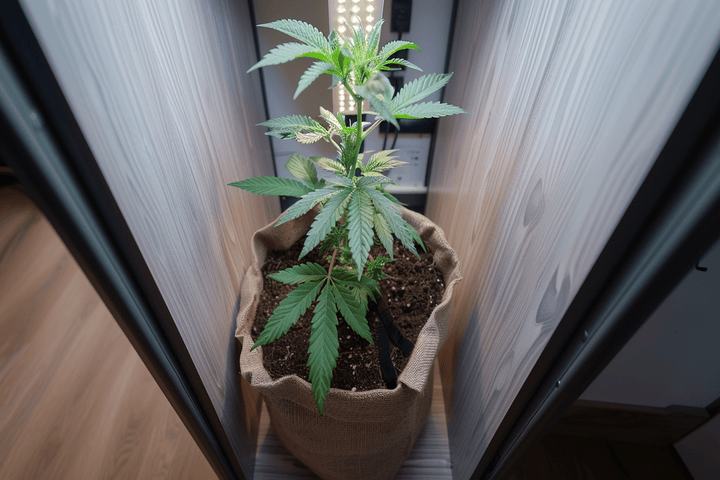
One of the most useful shifts you can make is to stop designing an ideal setup in theory and start working with what's already available. That might mean adapting:
- A closet or cupboard converted into a micro-grow
- A small tent in a spare room
- A section of a shed, garage, or attic.
- A discreet corner that already has partial light control
The goal isn't to create perfection. It's to create consistency inside the constraints. Even professional horticulture environments begin this way, then scale once the fundamentals are stable. Each of the environments above can be adapted to successfully grow cannabis, provided the necessary drivers are present (Yes, you can actually successfully grow cannabis in a closet).
Related Article:How To Start A Closet Cannabis Grow
How To Cultivate Weed: The Importance of Light
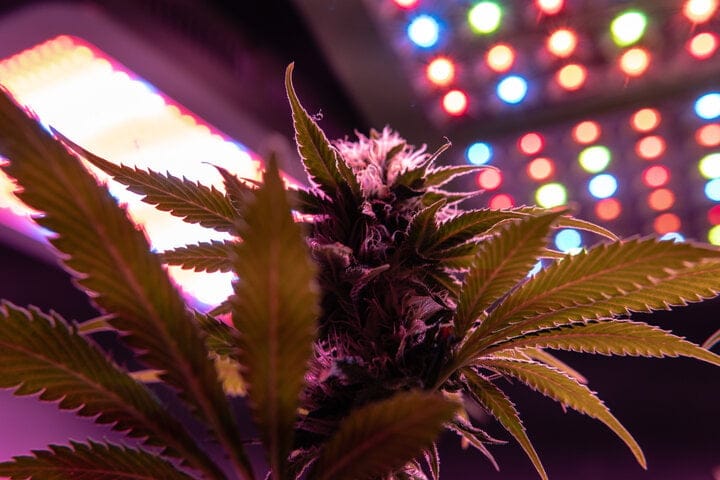
Light is often the biggest limiting factor in smaller environments - but also the one you have the most control over. If you're serious about learning how to cultivate weed in any kind of space, understanding light matters more than expanding your footprint. Plants don't need a large area to grow, but they do need consistent, appropriate light intensity.
Modern lighting solutions have made this easier than ever, but the principle stays the same. Light quality and consistency are key drivers of plant development across horticulture - not just cannabis.
In practical terms, achieving this means:
- Making the most of existing light, rather than adding more unnecessarily
- Using reflective surfaces to maximize efficiency in tight spaces
- Managing plant height so light is distributed evenly
- Avoiding shaded areas where growth becomes uneven
When space is limited, better light management can often be the difference between average and great results. Read A Guide To Choosing Grow Lights for more details on how to pick the right kind of lighting for your grow - and how best to set it up for success.
AIrflow: The Part Some Growers Underestimate
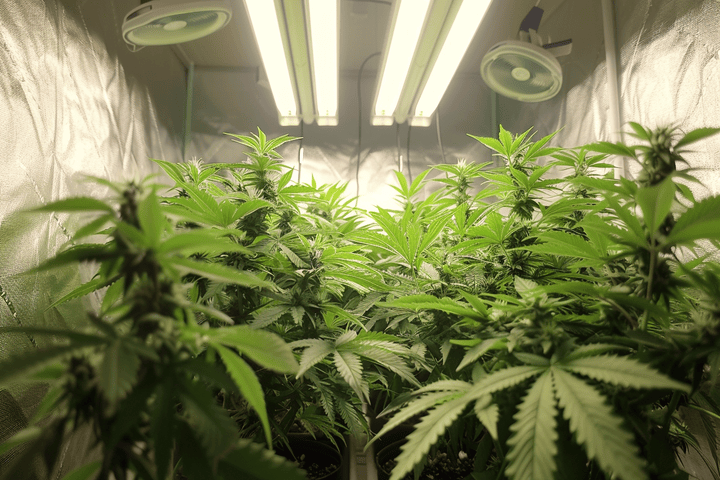
When learning how to cultivate weed in a small space, airflow becomes more important - not less. Air shapes temperature, humidity, and plant strength, even though it can't be seen directly. Without it, conditions can become uneven quickly, especially in confined areas.
That usually looks like this:
- Continuous, light air circulation rather than occasional bursts
- Eliminating stagnant areas where air can't move freely
- Allowing fresh air to enter and stale air to leave regularly
Good airflow in a cannabis grow supports everything else. Without it, even strong lighting and careful watering can fall short - and plants are far more susceptible to mold issues. Learning basics such as how to position fans in a grow tent can potentially make or break a plant's chances of seeing harvest.
Working With Vertical Space
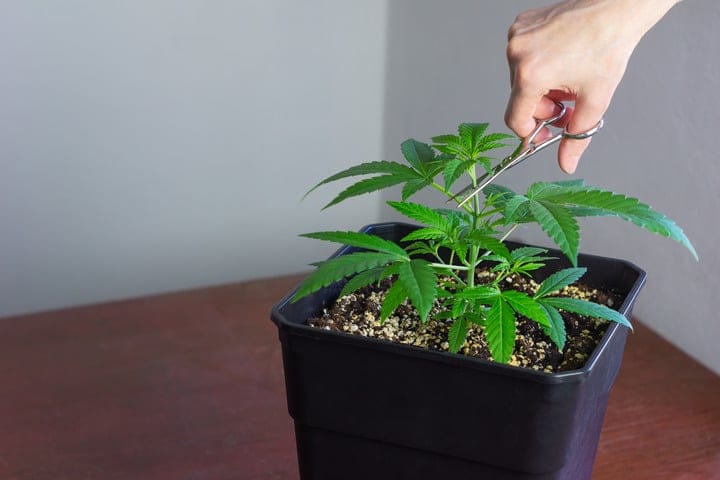
When floor space is limited, the thinking behind the structure of growing has to change. Learning how to cultivate weed in small environments often means shifting focus from width to height - and then controlling that height with intention.
Understanding cannabis plant training techniques is especially valuable here. Plants can be guided, shaped, and managed to suit the space they're in, in terms of height, width, airflow, and more. That's where smaller grows can actually become more precise.
Instead of letting plants grow unchecked, experienced cultivators tend to:
- Keep plant height controlled to allow even light distribution
- Encourage a balanced canopy rather than uneven growth
- Focus on plant structure as well as size
This approach often leads to more efficient use of both space and light.
Less Can Be More in Small Grow Spaces
A common beginner's mistake when figuring out how to cultivate weed in a limited area is trying to maximize plant count too soon. Introducing a higher number of plants can quickly lead to overcrowding issues, affecting airflow, light penetration, and overall plant health. Techniques such as the sea of green method are popular with cultivators looking to maximize plant count in a grow space, but require careful management to avoid issues.
A more effective approach taken by successful growers is to simplify:
- Grow fewer plants, but give each one its due care and attention
- Maintain clear spacing between plants to support airflow and light reach
- Avoid unnecessary competition between plants
When growing plants in tighter spaces, clarity and balance will typically outperform density every times, making it easier to get in sync with the rhythms of the grow.
Related Article:How To Grow Cannabis Using The Sea of Green Method
Routine Matters More Than Equipment
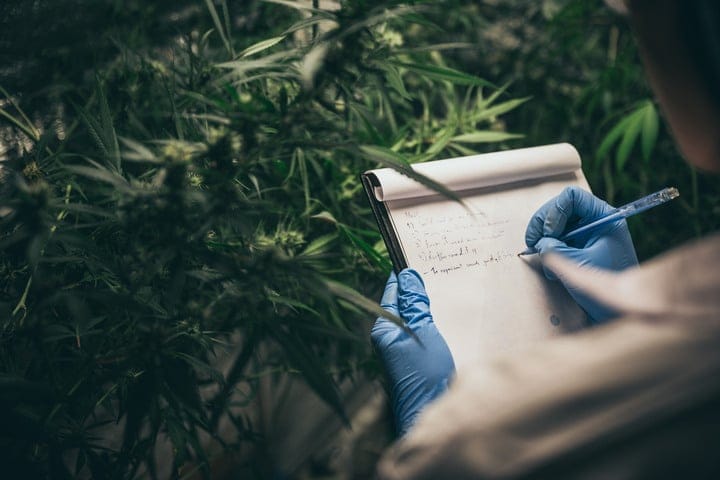
In small setups, inconsistency can show up faster. That's why establishing a routine becomes one of the most valuable tools at your disposal when learning how to cultivate weed. Growers don't need a complex system - just a repeatable one.
That might include:
- Regularly checking plant condition and growth patterns
- Removing excess or dead material before it builds up
- Keeping the grow space clean and easy to manage
These actions don't even take long to complete, but they all stack up over time. These small, consistent habits tend to produce stronger results than occasional, reactive efforts.
Choosing The Right Genetics For Your Space
Not all plants behave the same way, and that matters more and requires careful thought when space is limited. Part of learning how to cultivate weed effectively is matching the plant to the environment, not forcing the environment to suit the plant.
Stable genetics tend to offer more predictiable growth, which makes them easier to manage in confined spaces. That consistency becomes valuable when you're working within clear limits. Access to a broad selection - like the range available through Seedsman - allows growers to choose cultivars that align with their space, their setup, and their approach.
It's not always necessary to remove the challenge. Sometimes rising to the challenge and solving the puzzle is the best path to grow and develop as a cultivator.
In smaller spaces, many experienced growers find autoflowering genetics work well due to their resllience, smaller stature, and because they don't require strict light manipulation to begin producing buds.
Smaller Spaces Build Stronger Awareness
There's an advantage to learning how to cultivate weed in a smaller environment that often gets overlooked.
Feedback is immediate.
Changes in temperture, airflow, or plant health show up quickly. That shorter feedback loop helps growers develop awareness faster than they might in a larger, more forgving space. Growers start to notice patterns, and understand cause and effect more clearly. And over time, rely less on guesswork. That awareness carries forward, no matter how the setup evolves.
Working With What You Have is the Skill
At its core, learning how to cultivate weed isn't about building the perfect space. It's about understanding how to use the space you already have. Once you stop waiting for ideal conditions, progress becomes easier to access. Growers can observe, adjust, and improve, getting in sync with the rhythm of the plant. From here, finding balance and harmony are what matters, taking the guesswork out of growing and tunring it into a joy.
Better grows don't come from having more room, or more equipment. They come from using the space - whatever it looks like - with more intention.
