
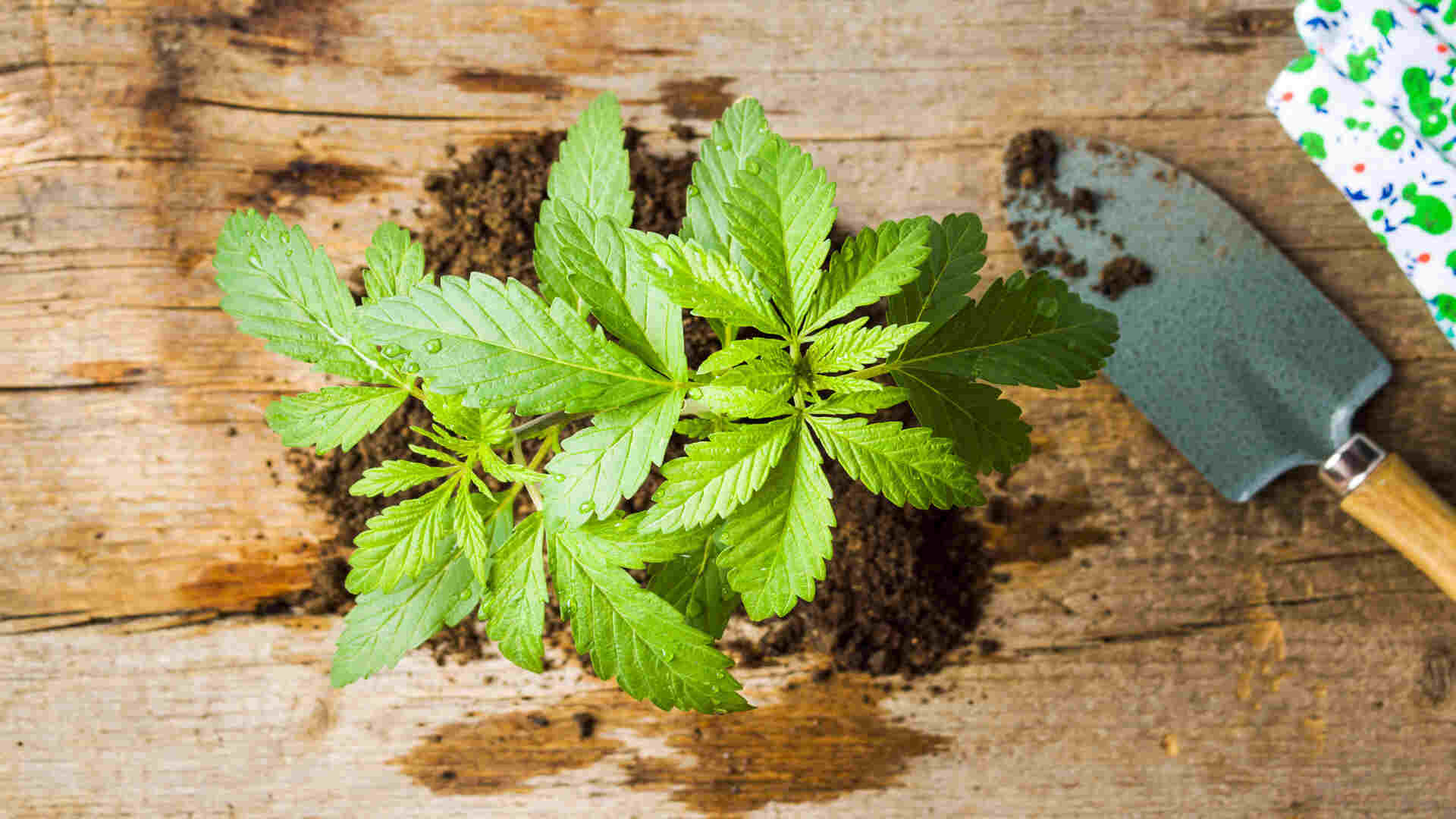

As spring settles in and the days get longer, the cannabis growing community knows one thing: it’s planting season. Whether you’re planning your first home grow in a quiet corner of your garden or setting up an indoor tent, understanding cannabis planting is absolutely essential. This isn’t just about tossing a seed in soil and hoping for the best – successful cannabis planting is a thoughtful process that sets the foundation for strong, healthy, high-yielding plants.
This guide is designed for those new to growing cannabis and will walk you through everything you need to know about cannabis planting – from choosing the right medium and pot size, to transplanting, watering, and more. Grab a cuppa, because we’re going deep.
What Is Cannabis Planting?
Fairly straightforward by definition, cannabis planting refers to the early stages of a growth cycle when you germinate seeds and place them in a suitable growing medium. It’s the launch pad for everything that comes next – root development, vegetative growth, and eventually flowering.

A well-planted cannabis seed has the potential to become a thriving plant. A poorly planted one, on the other hand, might never make it past the seedling stage. So let’s start at the very beginning: with the seed.
Choosing the Right Cannabis Seeds
Choosing the right cannabis seeds is a crucial step in ensuring a successful grow. With a wide variety of cannabis strains available, each with its unique characteristics such as THC content, flavour, and growth habits, selecting the right seeds can be overwhelming. It’s important to choose seeds that match your growing conditions and experience level. For instance, feminised seeds are a popular choice because they eliminate the need to identify and remove male plants, simplifying the growing process. By selecting the right seeds, you set the foundation for a fruitful and enjoyable growing experience.
Germination Process for Your Cannabis Seeds
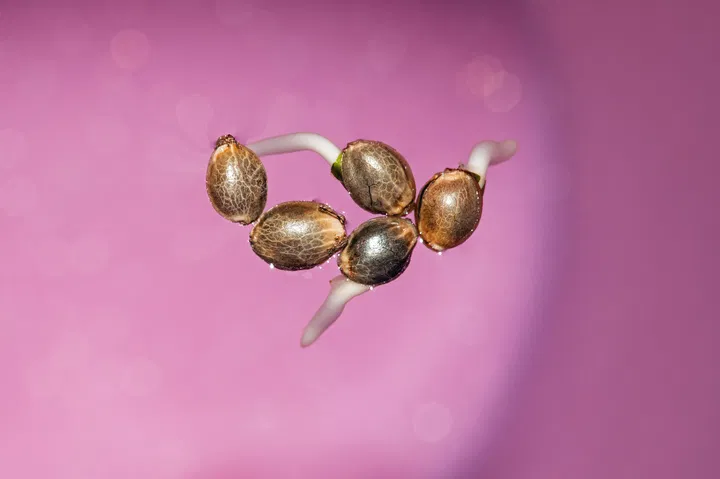
Before you can plant anything, you’ll need your seeds to sprout. The germination process is the initial phase in which a seed sprouts and begins to develop roots. Starting the whole cannabis growing process correctly, with proper germination, is crucial as each seed contains all the genetic information necessary for growth. This process involves activating the seed so it sends out its first root – the taproot. Environmental factors such as warmth and moisture trigger physiological changes within the seed, leading to the emergence of roots and cotyledons. This part is vital. Without it, your cannabis seed is just a little brown pebble.
There are several ways to germinate cannabis seeds, some more popular than others, but you can check out a guide to the best ways to germinate cannabis seeds here. Once you’ve got taproots, it’s time to get planting.
Planting Your Germinated Seed
Once you’ve got that little taproot sticking out, it’s time to get it into its first home.
Planting in Soil
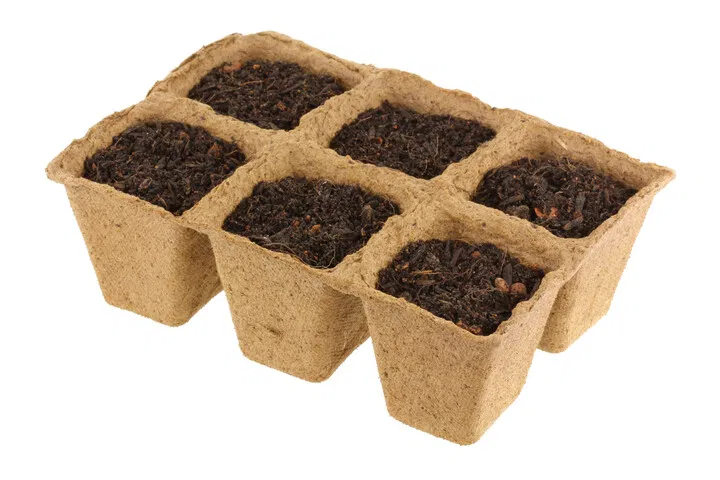
- Fill a small pot (a plastic cup will do, or something roughly 0.5-1 litre) with light, well draining soil. Avoid soils with slow-release fertilisers – they can burn young roots.
- Create a small hole about 1-2cm deep.
- Gently place your seed in the hole with the taproot pointing downward into the soil.
- Lightly cover with soil, and do not pack it down – roots need air. Proper placement and care of the plant roots are crucial for healthy growth.
- Mist the top of the soil with water and keep the pot in a warm area 18-24C with high humidity.
- Covering the pot with cling film or a humidity dome can help retain moisture while the seedling emerges.
Lighting Tip: Seedlings don’t need intense light. A gentle LED or fluorescent grow light at 18-24 inches works great.
Choosing a Growing Media For Cannabis Planting
Your growing medium affects everything – watering needs, pH levels, and nutrient absorption. Here’s a quick breakdown of the most popular substrates for cannabis planting:
Soil
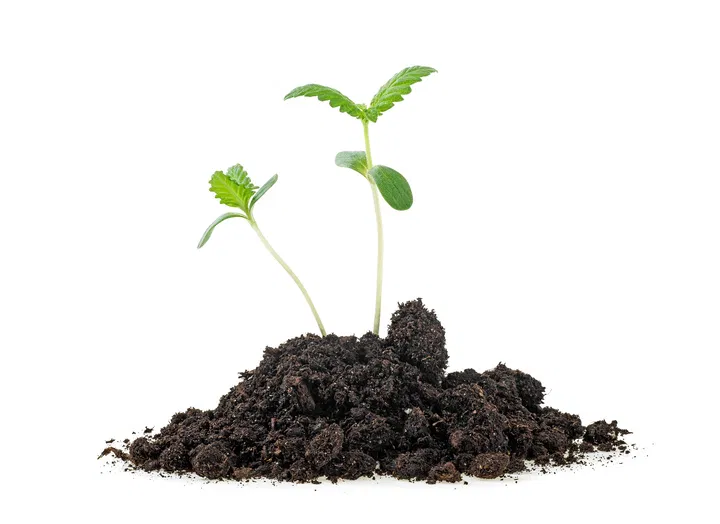
Best for beginners
Acts as a buffer – more forgiving of mistakes
Contains organic nutrients, often needing fewer bottled feeds
Choose a cannabis-specific light mix or make your own with compost, perlite, and worm castings
Avoid: Garden centre soil with synthetic fertilisers. These are not cannabis-friendly. Instead, use loose and airy potting soil with the right pH levels and moisture to ensure successful germination and growth.
Coco Coir
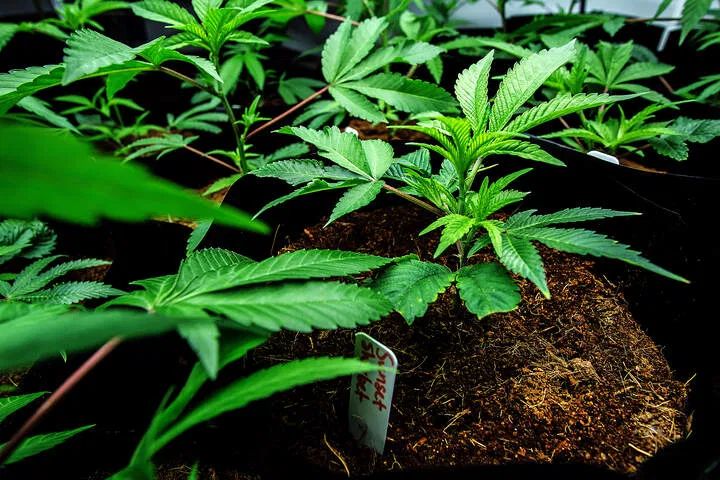
Coco coir is made from coconut husk fibres. This makes it renewable and eco-friendly. If you’re considering using coco coir as your substrate for cannabis planting, consider the following:
Excellent drainage and oxygenation, promoting fast root growth and a strong root system
Requires careful nutrient management: coco coir has no nutrients of its own
Must be flushed and buffered before use to remove excess salts
Note: Water more frequently than with soil, but don’t drown it.
Rockwool
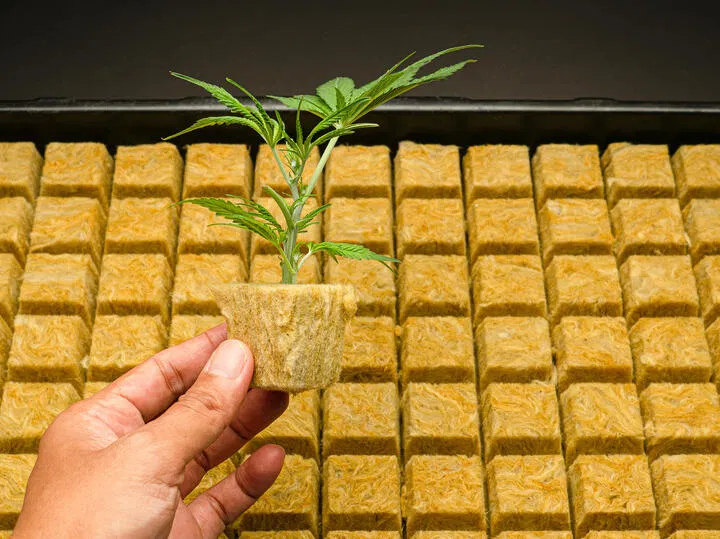
Rockwool, also known as mineral wool, is an insulation material made from melted rock and recycled slag. It’s spun into fibres, then bound and compressed.
Inert and sterile – favoured in hydroponics
Holds moisture well but needs to be kept aerated
Must be soaked in pH-adjusted water (pH 5.5-5.8) before planting
Not the best choice for beginners, but great if you’re planning to use a hydroponic system in your setup.
How to Choose the Right Pot Size and Type for Cannabis Planting
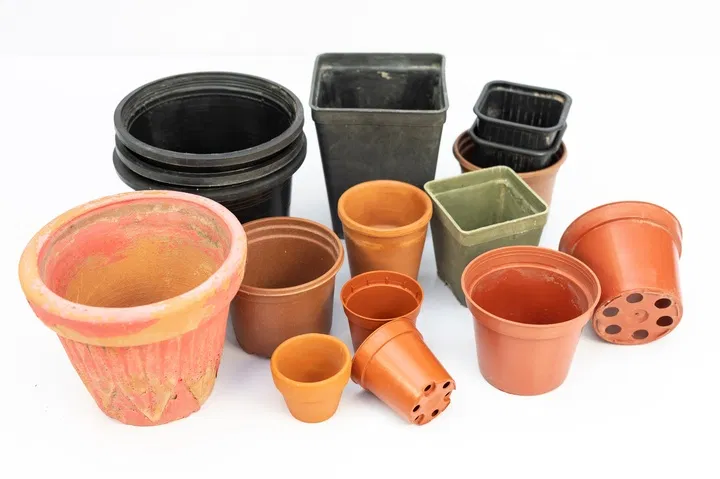
Choosing the right pot at each stage is more important than most beginners realise. Too small, and roots get cramped. Too large too soon, and you risk root rot from excess moisture. You wouldn’t put an alsatian pup in a chihuaha’s kennel, right? Additionally, certain pot types can help achieve shorter plants, which can create a denser canopy and improve yields, especially in indoor growing environments.
Pot Sizes by Growth Stage
Seedling Stage: 0.5-1L
Vegetative Phase: 3-7 L - During the vegetation phase, the pot size is crucial as it allows the roots to expand, supporting the plant's growth and preparing it for the flowering stage.
Flowering Stage (final pot): 10-20L (outdoors you can go much larger)
Types of Pots for Cannabis Planting
There are plenty of options when it comes to choosing the type of pot you want to grow cannabis in; some better than other. Consider the pros and cons of each pot type below:
Plastic: Cheap, widely available. Watch out for poor drainage
Fabric Pots: Allow root air-pruning, prevent root binding, and improve oxygen to the root zone.
Air Pots: Innovative design with holes throughout – encourages vigorous root growth.
Terracotta: Great for outdoor grows, though they can dry out quickly in the heat.
Drainage Tip: Always elevate pots slightly and use trays – sitting in water is a no-go for cannabis.
If you want an in-deptth guide to the best pots, check this handy guide to the best cannabis growing containers.
Transplanting: When and How to Do It Right
Once your plants reach a certain size, the pot will no longer accommodate them. This means you’ll need to transplant them, also known as ‘potting up’, into a larger pot to allow expansion of the root zone. A strong root system is crucial during transplanting as it ensures better nutrient uptake and overall plant vigour. You’ll need to transplant your cannabis plants 1-2 times during their lifecycle. Doing this correctly can significantly improve plant health and yield. But how do you know when it’s time?
Sign It’s Time To Transplant:
To take the guesswork out of it, there are some key signs to look for that will indicate when it’s time to introduce your cannabis plants to a bigger pot. Look for the following:
- Roots circling the bottom of the pot, indicating that the plant roots need more space to grow and absorb nutrients effectively
- Slowed growth despite proper care
- Soil drying out rapidly after watering
How To Transplant Step by Step
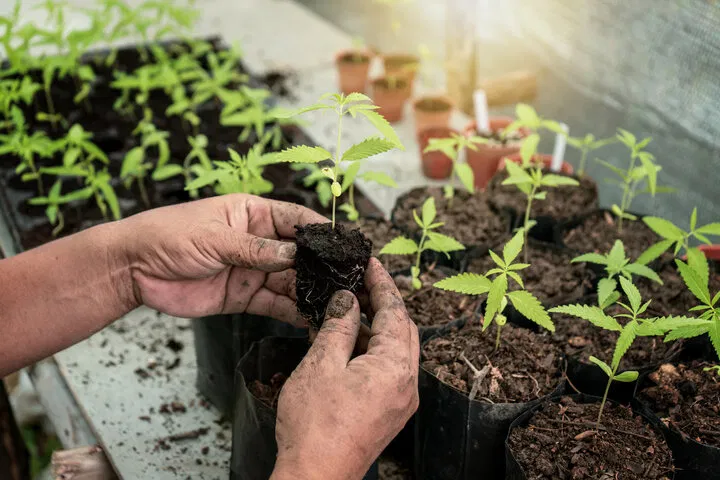
There’s more to transplanting than a simple lift and lay. Follow this guide to transplanting safely, and your plants will quickly adjust to their new homes. In short summary, when transplanting:
Water the plant lightly a few hours before transplanting
Prepare the new pot with fresh growing medium
Gently squeeze the sides of the old pot to release the root ball
Hold the base of the plant and tip it upside down, supporting the soil with your other hand. Be careful with the tap root to avoid damage.
Place it into a pre-made hole in the new pot and gently backfill with soil
Water lightly and keep in low light for 24 hours to reduce transplant shock.
Tip: Don’t fertilise right after transplanting - allow the roots to settle first.
Watering Tips for Healthy Growth
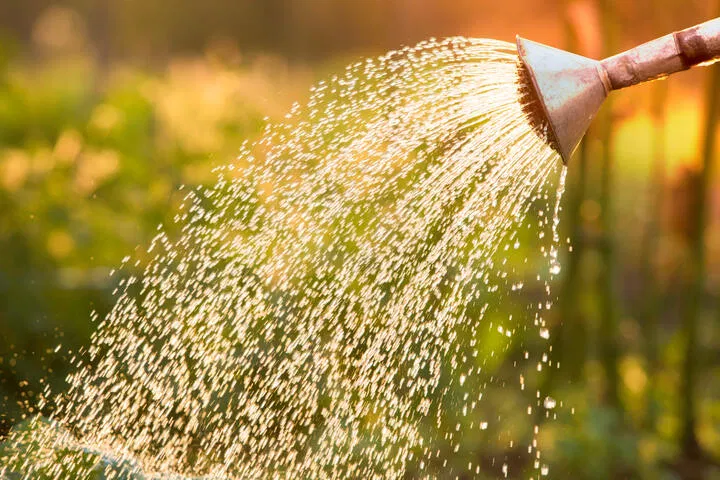
Watering is a vital step in plant care, and something a lot of people get wrong. While it seems simple, it’s often the cause of newbie growers’ woes. It’s key to remember that cannabis likes a moist – but not wet – environment. It’s better to slightly underwater than overwater, as underwatering is an easier fix. .
Best Practices for Watering Cannabis Plants:
- Water only when the top 2-3cm of soil feels dry
- Use filtered water or rainwater where possible (especially in hard water areas)
Ensure your water is within the correct pH range:
Soil: 6.0-7.0
Coco/Rockwool: 5.5-6.5
Proper watering is crucial for the health of plant roots. Rather than have a strict watering schedule, observe your plant and its substrate and let the signs guide you. If growing outdoors in high heat, however, it’s a good idea to water your plants early in the day. Leaving it until later runs the risk of the midday sun turning those water droplets into tiny magnifying glasses which could burn your plants.
Overwatering Symptoms: Droopy leaves, yellowing, and fungus gnats. Overwatering can be tricky to fix, but if you find yourself with overwatered plants, read our guide on how to fix overwatering.
Mulching and Soil coverage
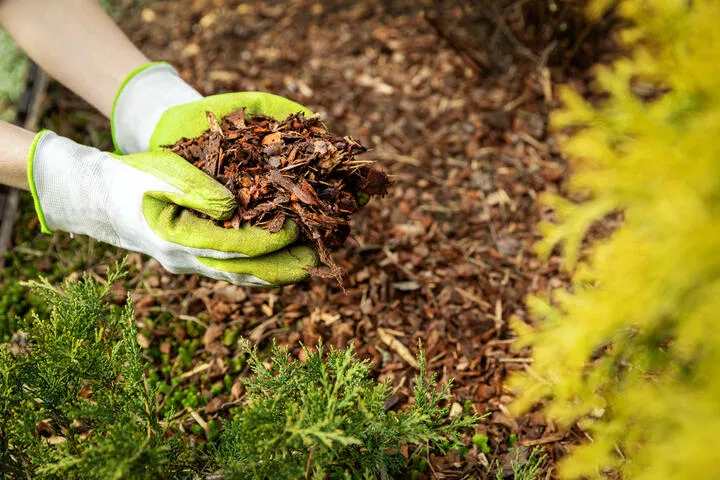
Mulching will help regulate your soil temperature, retain moisture, and deter pests when cannabis planting. It’s a surprisingly effective tool to have at your disposal, even in indoor setups. There are various different options for mulching, and they’re all fairly cheap and easily obtainable. Additionally, mulching benefits the plant roots by maintaining a stable environment, which is crucial for healthy root development.
Good Mulching Options for Cannabis Planting:
- Organic straw
- Shredded leaves
- Perlite or hydroton (clay balls)
- Light compost layer
Apply mulch once your seedlings have established their first true leaves and the surface has dried a few times. Mulching is crucial for maintaining healthy plant roots by regulating soil temperature and moisture levels.
Cannabis Planting - Final Thoughts
Correct cannabis planting is like laying the foundations for a house – you won’t see the benefits straight away, but everything depends on it. With the growing season now rolling in, there’s no better time to get your hands dirty.
Whether you’re nurturing one plant on your windowsill, managing a small indoor grow tent, or dealing with an outdoor grow, cannabis planting is where it all begins, and is a vital cog in the growing machine. Choose the right medium, understand your pots, water wisely, and handle seedlings with the utmost care. With a bit of patience, you’ll soon be watching your plants reach for the light – and eventually, your hard work and attention to the details will be rewarded. Starting the whole cannabis growing process correctly, especially with proper germination, is crucial for success.