
Sound healing has existed for millennia, from Himalayan singing bowls to chanting, but what do sound frequencies do to plants? As early as the 1970s, scientific studies have been conducted on sound waves and plant growth. While some may think it’s impossible to increase growth, yield, and overall plant health with sound alone, science seems to disagree. This article will explore the recent science behind plant growth and sound frequency and discuss how to implement this knowledge in your garden.
What is a Sound Wave?
Before we discuss the science behind sound waves and plant growth, let’s define sound and familiarise ourselves with its associated terms. Sound waves are vibrations that travel through air, water, or solids. Depending on how the waves hit the medium, they will vibrate differently, changing the frequency. A frequency is the rate at which the vibration occurs. They are measured by Hertz (Hz) and kilohertz (kHz). Frequencies are found throughout nature, from sounds we can hear to light we can see and electricity we can feel. Plants use frequencies to communicate with the living world around them.

Plant Frequencies
We’ve long understood that plants communicate using volatile organic compounds (terpenes) and underground fungal networks, but sound is another, often overlooked language they use. Plants use sound to communicate with other organisms. That’s right—plants can produce and respond to sound waves. These vibrations, produced at different frequencies, carry meaning, signalling everything from environmental stress to the presence of pollinators.
The Science Behind Sound Perception in Plants
While plants don’t have ears in the traditional sense, they are far from deaf. Plants are equipped with mechanoreceptors—tiny structures in their cells that can detect mechanical vibrations. When sound waves travel through the air, water, or soil, they generate subtle physical shifts that these receptors can sense. These vibrations can trigger a cascade of biological processes, including changes in gene expression, hormone release, and cell signaling. Researchers have observed that different frequencies can influence various functions in the plant, from root elongation to flowering cycles. This suggests that sound may act like a subtle environmental cue, like light or gravity, guiding plant behavior. It’s a reminder that plants are highly responsive to their surroundings, just on wavelengths we might not always perceive.
Frequency and Pollination
One of the most fascinating ways plants use sound to communicate is with pollinators. Plants produce frequencies that pollinators can detect and vice versa. When a plant detects the sound of a pollinator's wings vibrating, it can respond by releasing more pollen, or, in the case of the evening primrose, sweeten its nectar. If a flower has been depleted of its nectar reserves, the frequency changes and insects can distinguish flowers with low nectar from the sounds emitted. They will pass by the flower rather than waste energy on a plant with no nectar.

The study of plant frequency is known as bioacoustics, and it can help us understand more about our gardens and the impact we can have on them.
What has Plant Bioacoustics Taught us So Far?
Recent studies have revealed that plants produce measurable sounds when stressed, damaged, or communicating. For example, in a 2019 study, tomato and tobacco plants under drought stress or after being cut emitted significantly more sounds than control plants. These weren’t random noises—they were high-frequency clicks and pops created by changes in internal cell pressure and structure, likely associated with cavitation in the plant's xylem. The takeaway? Plants are not passive. They interact with their environment through sound.
Because vibrations generate sound, plants' sounds can be attributed to the components of cells vibrating.
Sound plays an essential ecological role in plants' lives. Plants can create vibrations and perceive them as well. By studying the way plants utilize sounds, we can implement certain frequencies at a commercial level to influence our plants' health.
Frequencies and Plant Hormones
One of the most exciting areas of study in plant acoustics is the potential for sound frequencies to influence hormone production. Hormones such as auxins, gibberellins, and cytokinins are crucial in regulating plant growth, development, and stress response. Preliminary research and anecdotal reports suggest that specific frequencies stimulate higher auxin levels, promoting cell elongation and root formation. Gibberellins, known for initiating seed germination and promoting stem growth, may also be activated under the right acoustic conditions. This could explain why some growers observe more vigorous vegetative growth or earlier flowering when using sound therapy. While more research is needed to confirm which frequencies correspond to which hormonal responses, the connection between vibration and plant physiology is an area ripe for further exploration.

Using Sounds to Communicate with Plants
People have been talking to plants, playing music, or singing in the garden for generations—some might say intuitively—but now we have the data to back up these rituals. We know that specific frequencies can stimulate auxin production or delay ripening. Wheat yields have been shown to increase under sound treatments. This means that adding the right sounds to our gardens can improve plant health and productivity without synthetic inputs.
So go ahead: sing to your Purple Oreoz, whisper sweet nothings to your Strawberry Banana Grape, or put on some Bach during your morning watering. It’s not just hippie magic—it’s science.
Sound Frequency vs. Music: What's the Difference?
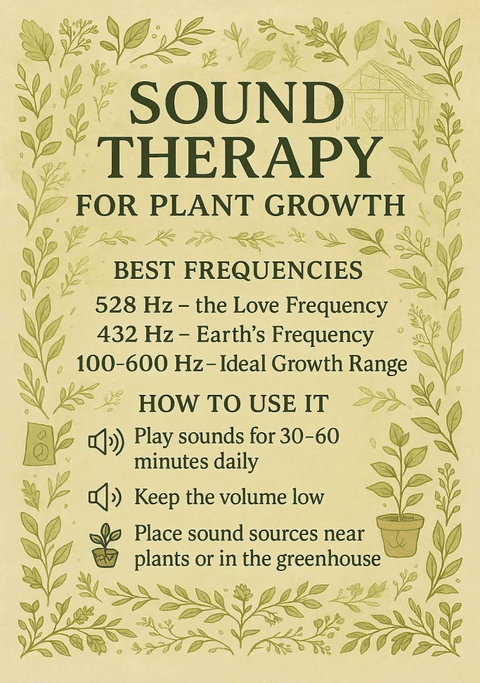
It’s easy to assume that any music will help plants grow, but there’s a distinction between listening to your favorite playlist and applying targeted sound frequencies. Music contains a wide range of frequencies, rhythms, and tones, and not all of them are beneficial to plant life. What plants appear to respond to most directly are the frequencies themselves, not the melody or lyrics. For example, a pure tone played at 528 Hz may encourage cellular repair or growth, whereas loud, distorted bass-heavy music might mimic environmental stress. Classical music or string instruments often contain harmonic and soothing frequencies that promote calm in humans and plants.
On the other hand, harsh sounds or erratic rhythms can overstimulate or create dissonance in the garden, potentially stunting plant growth. The key takeaway? Less about genre, more about the actual frequencies and their energetic impact.
French Physicist Creates Music for Plants
One of the most interesting advancements in this field comes from French physicist and musician Joel Sternheimer. Sternheimer, who studied quantum physics at Princeton, discovered a way to translate the quantum vibrations of amino acids into musical notes. Each note in his compositions represents a specific amino acid, and together the melody mirrors the vibrational pattern of a complete protein. When a plant is exposed to the melody that matches one of its growth proteins—like cytochrome C—it produces more of that protein. In tests, his tomato plants grew up to 2.5 times larger and were said to taste sweeter. Even more fascinating, he’s composed melodies that supposedly can inhibit proteins, which could offer a way to suppress weeds or plant pathogens—no chemicals required.
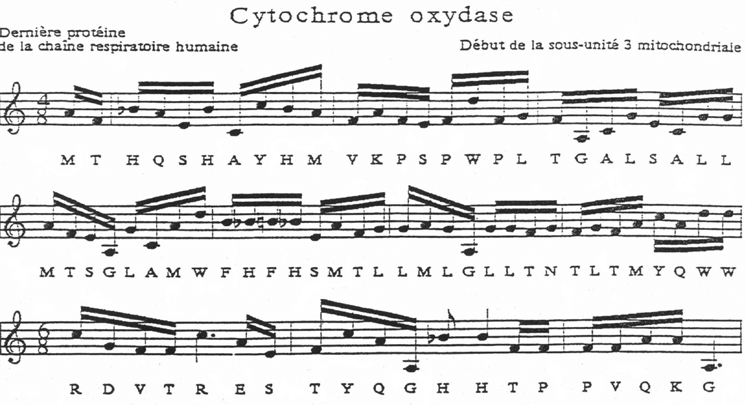
This isn’t music chosen at random. It’s a calculated sound orchestration, harmonising with life's molecular architecture. Sternheimer refers to this as an "electromagnetic fertiliser." Imagine replacing synthetic inputs with sound waves directly stimulating or inhibiting protein synthesis—affordable, accessible, and sustainable.
What happens when you play these sounds for your plants? Try it and find out!
Different Sounds for Different Growth
Different sounds generate different frequencies, meaning that not all music is created equal for plant growth. Generally, soft and soothing music promotes vitality, while harsh or aggressive sounds can stress plants out. Many growers swear by classical music or stringed instruments in the garden, especially in the morning or before the heat of the day. These frequencies encourage stomatal opening, making foliar sprays more effective when timed just right.
On the flip side, plants don’t respond well to too much bass, chaotic rhythms, or angry tones. Loud rock, abrasive rap, or distorted noise may do more harm than good. Just like people, plants thrive in a supportive, nurturing sound environment.
What Does This Mean for Your Weed?
For cannabis cultivators, integrating sound frequency into the grow could become another layer of holistic support in the garden. This is especially true if you grow indoors or outside in the city, where nature's sounds aren’t as present. You can improve the efficiency of your sprays by increasing the stomatal opening by mimicking natural sounds at specific times, like the sound of bird song in the morning, while foliar feeding or applying IPM sprays. Or when you are watering, playing tunes that use 528 hertz, which is known to influence water molecules.
Over the last decade, several companies have taken these ideas and produced commercial products such as the Biowave or the PAFT. While these machines are expensive, try a small speaker and create a playlist for your garden using the frequencies mentioned before dropping $1000. Take notice of small changes, are there fewer leafhoppers or spider mites? Try using a smaller dosage in your foliar regimen and see if you get the same results.
Conclusion
It’s easy to discredit something as “woo woo” simply because you can’t see it, but the ether surrounding us is filled with frequencies invisible to the naked eye or ear and has profound imapcts. Take this lesson from your garden and apply it to your life. Are you struggling to go to sleep but staring at blue light, a spectrum produced by the sun in the morning to wake up organisms? Are you stressing out but listening to hardcore music? Instead, try the Earth’s frequency of 432 hertz to ground yourself. So turn up the bird song and think loving thoughts while you water your plants, and just maybe they will grow bigger and better than ever before.
------------------------------------------------------------------------------------------
References
Symphonies of Growth: Unveiling the Impact of Sound Waves on Plant Physiology and Productivity
Music for Plants - What Helps Plants Grow and What Doesn't
Symphonies of Growth: Unveiling the Impact of Sound Waves on Plant Physiology and Productivity
(PDF) EPIGENETIC REGULATION OF PROTEIN BIOSYNTHESIS BY SCALE RESONANCE / Invited lecture
Music and Plant Growth: Here's What the Science Says – Pistils Nursery
Effect-of-Music-on-Plants-An-Overview.pdf