

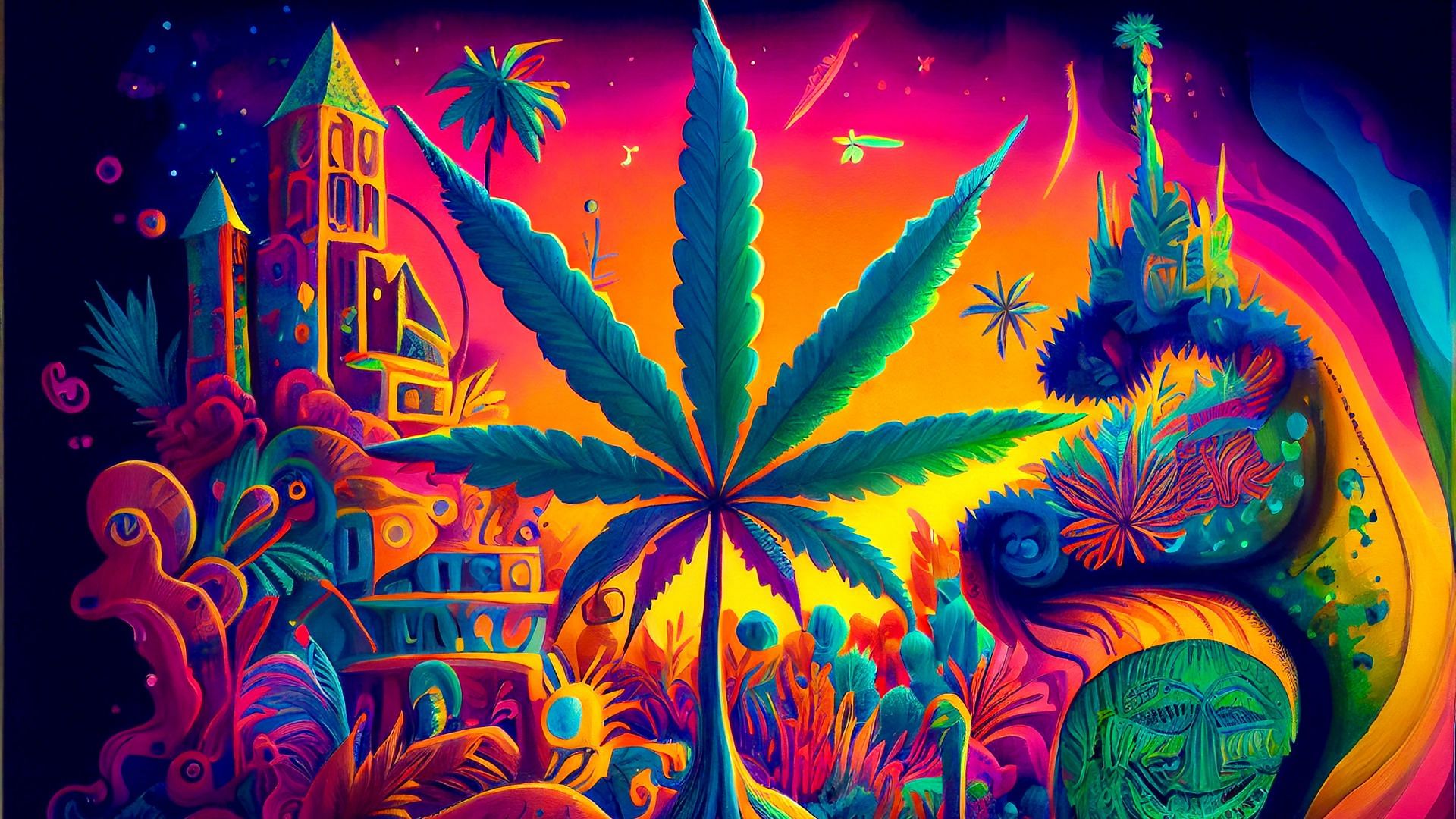
Though the effects of cannabis are highly dissimilar to those of psychedelic drugs like LSD, psilocybin or DMT, the medical literature tends to classify the cannabis plant as a hallucinogenic substance. And while the vast majority of cannabis users are unlikely to experience any delirious visions, those with mental health issues such as schizophrenia may develop psychotic symptoms – including hallucinations – after ingesting cannabinoids.
What Are Hallucinations?
A hallucination is any sensory experience that is not caused by an external stimulus. These phantom phenomena can take numerous forms, including auditory and visual hallucinations. It’s also possible to have olfactory, gustatory and tactile hallucinations, which refer to illusory smells, tastes and bodily feelings.
In most cases, hallucinations are triggered by mental illness, with psychotic disorders being strongly associated with various types of delusion. Psychedelic drugs are also famous for inducing fantastic internal voyages, although these trips often have very little in common with the effects of cannabis.
The Difference Between Cannabis And Psychedelics
There’s a pretty good reason for the lack of similarity between the psychoactive effects of psychedelics and cannabinoids, and that’s because these two classes of drugs activate separate neurological pathways and systems. Psychedelics, for instance, bind to serotonin 2A receptors in the brain and generate their trippy side effects by influencing serotonin signalling. In contrast, tetrahydrocannabinol (THC) – the main psychoactive component of cannabis – binds to cannabinoid 1 (CB1) receptors. This results in a dopamine surge, which is why cannabis use makes people feel so euphoric. Dopamine also affects heart rate and has a tendency to unleash bouts of uncontrollable laughter.

Of course, cannabis also contains other cannabinoids like cannabidiol (CBD) and a multitude of terpenes, all of which contribute to the plant’s effects. And while different cannabis strains have different amounts of these components, none can affect the brain in the same way as classic hallucinogenic drugs.
Having said that, anecdotal reports suggest that high doses of high-potency cannabis may trigger strange mental phenomena and bodily sensations. However, these aren’t the same as the hallucinations that most people associate with psychedelic drug use.
How Common Are Cannabis-Induced Hallucinations?
Verified reports of hallucinogen-like effects after ingesting cannabinoids are extremely rare, especially among people with no family history of psychosis. However, the effects of THC can trigger a psychotic episode in those who are genetically susceptible to such occurrences, which is why drug abuse is strongly discouraged in people with mental health disorders.
There is also evidence to suggest that the potential for psychosis is higher in young people who use cannabis, as the developing brain is particularly vulnerable to impairment due to substance abuse. For this reason, cannabis use is not suitable for adolescents.
In psychiatry studies, hallucinations among healthy adults using whole-plant cannabis are virtually unheard of, although there are a small number of reports of hallucinatory effects following the administration of purified THC. Additionally, there are numerous reported cases of psychotic hallucinations among users of synthetic cannabinoids such as ‘Spice’.

It’s worth mentioning, though, that synthetic cannabinoids are very different to those found in the cannabis plant. For instance, these nasty artificial drugs are often full CB1 agonists, meaning they have an extremely high binding affinity for these receptors. Conversely, THC is only a partial CB1 agonist and therefore has a weaker attraction to these binding sites.
Though more research is needed on this topic, some scientists speculate that overloading CB1 receptors may be the cause of the psychotic hallucinations caused by synthetic cannabinoids. THC, on the other hand, is unable to bombard these receptors to the same extent, which might explain why cannabis doesn’t cause hallucinations in healthy adult users.
On top of that, it has been suggested that other plant-based cannabinoids (or phytocannabinoids) such as CBD and CBG, as well as some terpenes, may mitigate the effects of THC, thereby reducing its potential to trigger hallucinations.
What Types Of Hallucinations Can Cannabis Cause?
While hallucinations after cannabis use are incredibly rare, the subject has received renewed scientific attention in the last few years thanks to a case report that was published in 2018[i]. According to the authors, a 30-year-old man with no family history of psychosis experienced “hallucinogen-like effects” after smoking cannabis containing 25 milligrams of THC in a controlled laboratory setting.
Describing the man’s discombobulation, the researchers explain that he “experienced a dissociative state and altered perceptions of auditory and visual stimuli at the time of peak drug effect.” Though unable to respond to doctors’ questions while tripping, the patient later reported “visual distortions in the form of the environment and floor sinking away and the appearance of patterns moving on the carpet and chairs in the room.”

On top of this, the man described “a hypersensitivity to voices,” whereby he was more aware of conversations around him but could not understand what was being said. Most strikingly of all, he also claimed to have undergone an out-of-body experience. According to the study authors, this included “the feeling of being removed from his body, existing above it in space, and feeling that his surroundings were sinking away from him, which was also accompanied by a feeling of paralysis.”
Though it’s difficult to scientifically evaluate and compare hallucinations produced by different drugs, the researchers did attempt to categorise the man’s experience using the Hallucinogen Rating Scale (HRS). Cross-referencing the patient’s HRS scores against those provided by other participants in psychedelic studies, they noted that his experience rated higher on certain aspects of the scale than those produced by psilocybin.
Despite this intensity, however, the study authors explain that his hallucinations were “qualitatively different” to the experiences triggered by psychedelics. In other words, the man didn’t undergo a typical trip, so it’s inaccurate to say that cannabis alters perception in the same way as hallucinogenic drugs.
The researchers also stress the rarity of this case, which is the only recorded example of hallucinogen-like effects in a healthy adult cannabis user.
Overall, then, it seems that cannabis hardly ever triggers hallucinations in those without a family history of psychotic disorders but can very occasionally induce some abnormal responses. Anecdotal reports also suggest that edibles may produce more trippy effects, as cannabis that is ingested orally is broken down by the liver into metabolites that can more easily cross the blood-brain barrier.
Ultimately, though, any information about the effects of cannabis needs to come with a disclaimer, as everyone responds slightly differently to cannabinoids, and it’s impossible to say with any certainty what you might experience.
________________________________________________________________________
[i] Barrett FS, Schlienz NJ, Lembeck N, Waqas M, Vandrey R. "Hallucinations" Following Acute Cannabis Dosing: A Case Report and Comparison to Other Hallucinogenic Drugs. Cannabis Cannabinoid Res. 2018 Mar 1;3(1):85-93. doi: 10.1089/can.2017.0052. PMID: 29682608; PMCID: PMC5908416. - https://www.ncbi.nlm.nih.gov/pmc/articles/PMC5908416/


